|
| Significant changes in the UI from the previous CTXMatrixBeta release. |
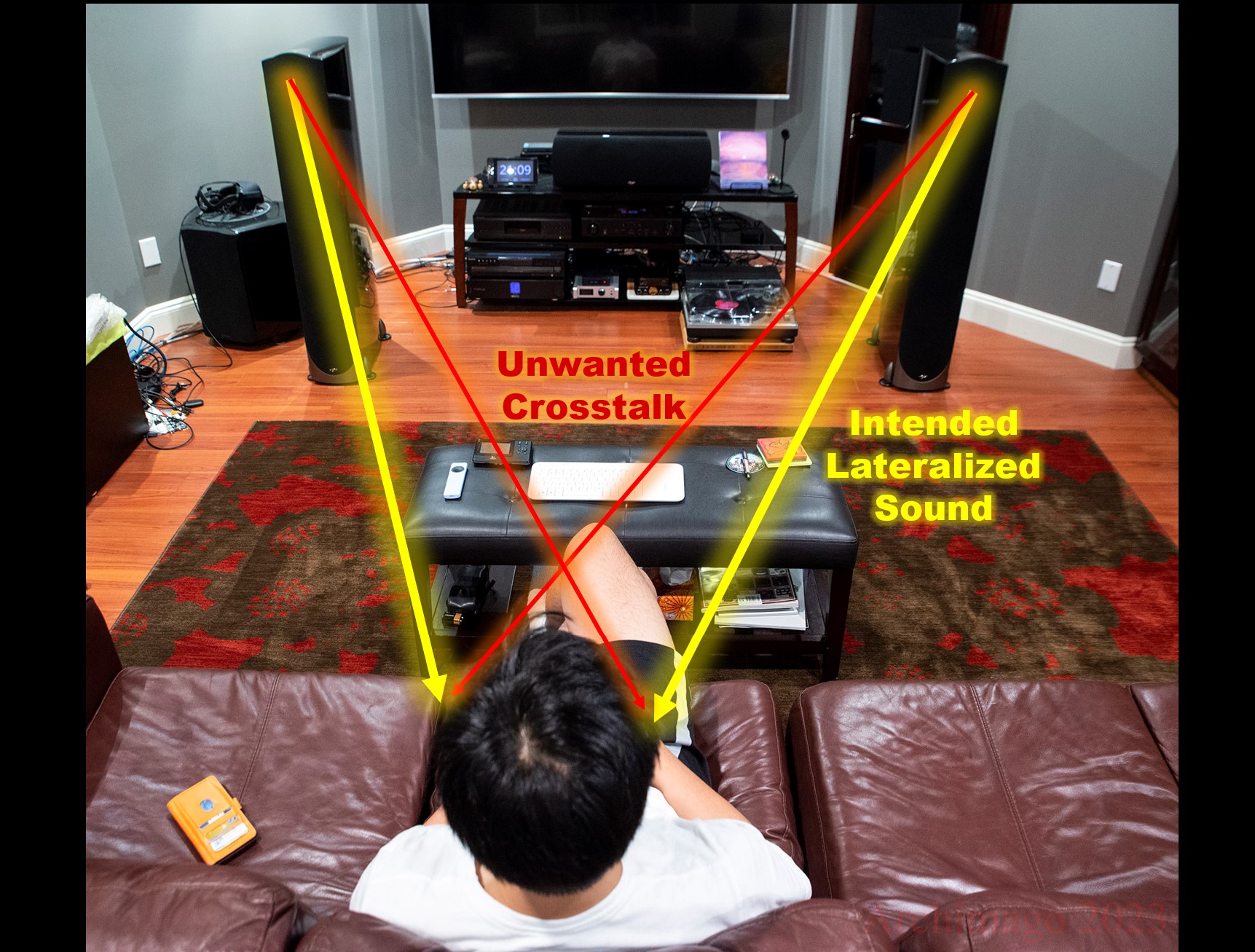
I want to remind 2-channel "immersive sound" lovers about the potential for using stereo crosstalk cancellation (XTC) / ambiophonics playback to enhance the 3D soundstage. You might have already heard of uBACCH in the audio magazines and on forums - why not try a similar effect for free (or through a small coffee donation)?!
You might recall, last year STC contributed a post on CTXMatrixBeta DSP for Windows. Well, it's great to see that he has continued to develop the software with updated user interface and abilities, this latest edition renamed CTXMatrix Lite, currently at version 1.3. It now includes a standalone processor which I'll spend some time discussing in this post, along with the 64-bit VST3 plugin as shown above that can be used in JRiver, Audirvāna and DAW software like Reaper.
Furthermore, there is now a VST3 plugin for Linux. Since I primarily use Windows for my music listening and processing, I'll stick with the Windows variant here with the hopes that some of this will be applicable. In my discussions with STC, he's aware of interest from Mac OSX users.
Perhaps the most important update in the last few months is that there is now improved support for standard ~60° stereo speaker angle (typically, the recommendation is 20-30° in ambiophonics). As a result, one should have a much better experience with the effect on most set-ups. In particular, hopefully more desktop computer music lovers will give this a listen without needed to move the speaker position and explore what you might be missing in your existing music library.
[If you run a miniPC streamer in the sound room like I do, CTXMatrix can easily be used like with HAF X-talk Shaper DSP discussed a couple years ago.]