Okay, we're in the final stretch of my measurements/review series on the Sabaj A20d 2022 DAC. This time, let's finish with some measurements around DSD performance, the headphone amp output quality, and let's talk about subjective listening impressions before the final summary on my impressions of the device. (See Part I and Part II for earlier instalments in this review.)
A 'more objective' take for Rational Audiophiles. Among other topics!
X/Twitter: @Archimago
E-Mail: archimagosmusings(at)outlook.com
[Some items linked to affiliate accounts - I may receive gift certs from qualifying purchases.]
Saturday, 27 August 2022
REVIEW: Sabaj A20d 2022 Version DAC [Part III] - DSD, Headphone Out, AMPT, Subjective Impressions and Summary. (And some more Peru pictures!)
Friday, 19 August 2022
REVIEW: Sabaj A20d 2022 Version DAC [Part II] - Resolution & Distortion. (Windows 11 22H2 available. Greetings from Peru!)
Let's continue our discussion of the Sabaj A20d 2022 today as we dive into the core of the DAC's PCM resolution characteristics. You might want to review Part I as I had discussed much about the hardware itself, the filter options for the device, and jitter already.
Saturday, 13 August 2022
REVIEW: Sabaj A20d 2022 Version DAC (ESS ES9038PRO) [Part I] - Hardware, Filters, and Jitter.
[Disclosure: Most of the products I review have been purchased personally or loaned from friends. On occasion, a manufacturer or seller will contact me about a device which I might have an interest in. This Sabaj DAC is one such device which was sent to me from the company for an honest, independent review. As I have done over the years, my review process focuses mostly on objective performance with some subjective listening opinions. Objective data rather than pure subjectivity I believe will help substantially mitigate bias.]
Over the last few years, we have seen an impressive proliferation of high resolution DACs at very reasonable price points coming from audio companies in China. In the world of consumer electronics, this should surprise nobody given that much of our technological products hail from that part of the world. Everything from Apple phones, to computer motherboards, to high-tech multinationals like AMD and Intel having manufacturing and assembly lines there.
On the test bench, we have the Sabaj A20d 2022 Version (currently ~US$420). Make sure to take note of the "2022 Version" because there is also the original A20d "2021 version" which clearly looks very different, does not feature headphone outputs, but is also based on the flagship ES9038PRO chip.
At the heart of this DAC, the ESS ES9038PRO is aided by the ES9311 "ultra-low noise" linear regulator to provide reference voltage to the DAC. Headphone amplifier is based on the TI TPA6120A2.
As I have been doing in the last year (like with the Topping D90SE, and S.M.S.L. DO100 previously) I think it's good taking my time with multi-part reviews to examine the various facets of these modern devices. Unlike back in the "old days" of digital where CD players only handled 16/44.1 content, modern DACs provide a whole host of samplerates, PCM + DSD, filtering options, potential noise and jitter variation, headphone output and input options typically USB and S/PDIF variants; even with these tests, as an audiophile who prioritizes sound quality, I haven't even seriously examined the Bluetooth audio options available in these devices over the years.
Saturday, 6 August 2022
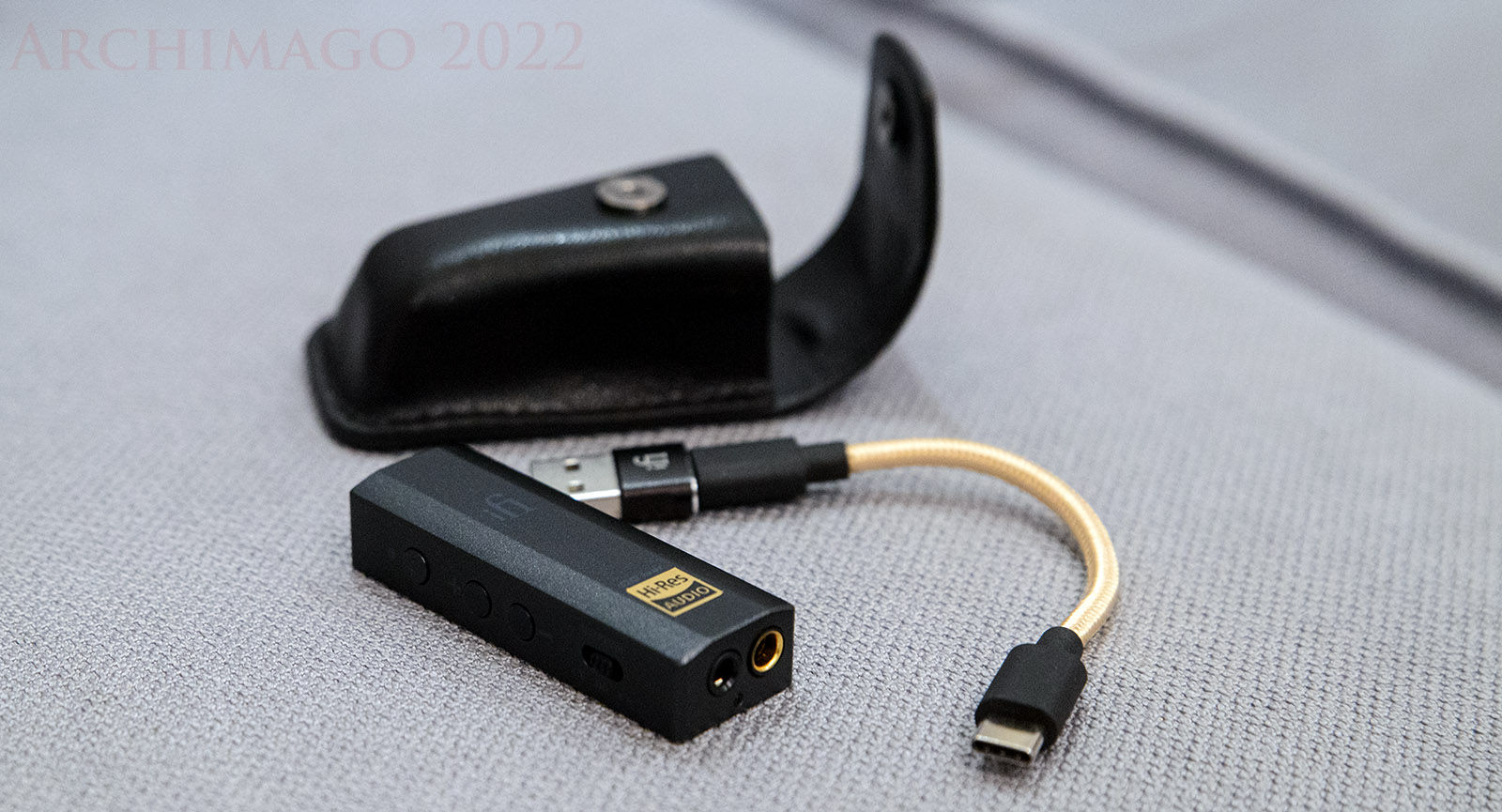
REVIEW: iFi GO Bar - Portable DAC / Headphone Amp (Cirrus Logic DAC, Balanced & Unbalanced).
My friend AudioPhil is really into his headphone gear. Recently he acquired the product above and asked if I might want to play with this for a few days... Sure, this looks interesting!
This is the new iFi GO bar (around US$320), a portable headphone DAC/amp. The USB interface is a USB-C form factor (480Mbps USB2.0 Hi-Speed), and there are outputs for single-ended/unbalanced 3.5mm TRS and balanced 4.4mm pentaconn. Interestingly, the company (iFi, subsidiary of AMR/Abbingdon Music Research) does not specify which DAC chip is used inside. Suspicion is that it's likely the Cirrus Logic CS43198 or CS43131, both are recent chips circa 2017 capable of "pseudo-differential" outputs and low-power consumption <40mW with rated THD+N of -115dB, DR 130dB, maximum PCM 32/384, and DSD256. The specs look good but don't get too excited about these ideal numbers when implemented in a USB dongle.
I don't know what's the point of being so secretive about the DAC chip used (Crutchfield says it's the 43131).
Monday, 1 August 2022
Pacific Audio Fest 2022 (PAF 2022) - Concluding observations and thoughts... (MoFi One-Step DSD controversy, and a few videos!)
Well, the first PAF 2022 is now in the record books (see Day 1 and Day 2 for context). I honestly hope that the organizers, companies showing off their goods, and attendees all had a great time. I regret not getting the RMAF2019 T-shirt so made sure to grab one this time around and will wear it with pride among fellow audiophiles. ;-)
As I was driving home to Vancouver, BC, I was thinking about audio shows in general and also specifically about the PAF... What was seen, the experience of these shows as an audiophile, stuff like that.
Sunday, 31 July 2022
Pacific Audio Fest 2022 (PAF 2022) - Day 2
In total, I spent 2 days at Pacific Audio Fest 2022. The pictures and comments here will cover some of what I saw and general impressions for those rooms. See the Day 1 post as well.
Let's get going!
Saturday, 30 July 2022
Pacific Audio Fest 2022 (PAF 2022) - Day 1
Hey there everyone, it's Pacific Audio Fest 2022 time here in Seattle! Since it was just a 3-hour drive from home in Vancouver, I figure it would be fun to check out the inaugural PAF this year. The last time I was at an audio show was back in 2019 for what would become the last Rocky Mountain Audio Fest - who knew!
My understanding is that PAF under the direction of Lou Hinkley brings with it experience from Capital Audio Fest held in Washington DC (which will be held this year November 11-13).
I think the audio geeks here in the Pacific Northwest and Western Canada appreciates the availability of an easily-accessible show in this part of the world to check out and listen to some of the latest (and greatest) the industry has on offer.
Saturday, 23 July 2022
Summer Musings: On Stereophile's "Quackery, Gullibility, and Open-mindedness". Nature of audio devices. Truths in audio (and medicine).
Well ladies and gents, I guess it's official. Stereophile, at least in part, is not a journalistic venture based on a recent "My Back Pages" article. In the opening 3 paragraphs of "Quackery, Gullibility, and Open-mindedness", Rogier van Bakel basically discards the importance of skepticism as a journalist, and seems to set the stage for audiophiles to accept basically all manners of quackery and snake oil.
For those who have been on this blog over the years, you probably know that I'm a physician working here in Vancouver, Canada. I write these audio musings and technical review articles as part of my audio hobby/journey to go beyond enjoying the music as a consumer, towards further understanding of how the technologies work, with the hope that the results of the explorations may be helpful for other pilgrims along this path as we discuss hardware and improving sonic fidelity.Saturday, 16 July 2022
REVIEW: MeLE Quieter3Q (Celeron N5105, 8GB DDR4, 256GB eMMC) MiniPC: Fanless, 4K/HDR streaming. Getting closer! (Thoughts on Apple's M1 Mini as HTPC.)
![]() |
| Yeah, that's an old XBOX 360 Kinect camera back there! Hey, there are cool things you can do with this as a 3D scanner... |
Greetings ladies and gents. In the posts for both the MeLE Quieter2Q post as well as just last week with the Beelink SER4 Ryzen 7 4700U computer review (BTW, I added an addendum - HDR10 works on that machine), I noticed questions, comments, and E-mails about utilization of these MiniPCs in the home theater setting; specifically video and HDR features.
Recently, I saw the availability of the MeLE Quieter3Q fanless MiniPC (currently around US$250) [in 2025, the updated model would be the MeLE Quieter4C with Intel N150 at the same price with more speed, RAM, storage]. With the various feature upgrades, I figure that this is one which might qualify as a reasonable HTPC computer given that it features HDR video capabilities and a bit more CPU processing power. As such, I decided to take it for a spin. I bought the slightly more expensive 256GB eMMC storage model; since I am targeting video playback, it might be nice to have some extra storage for local data.
Much of what I said about the Quieter2Q applies here, so let's focus on performance differences and discuss this machine as a video streamer beyond audio purposes...
Saturday, 9 July 2022
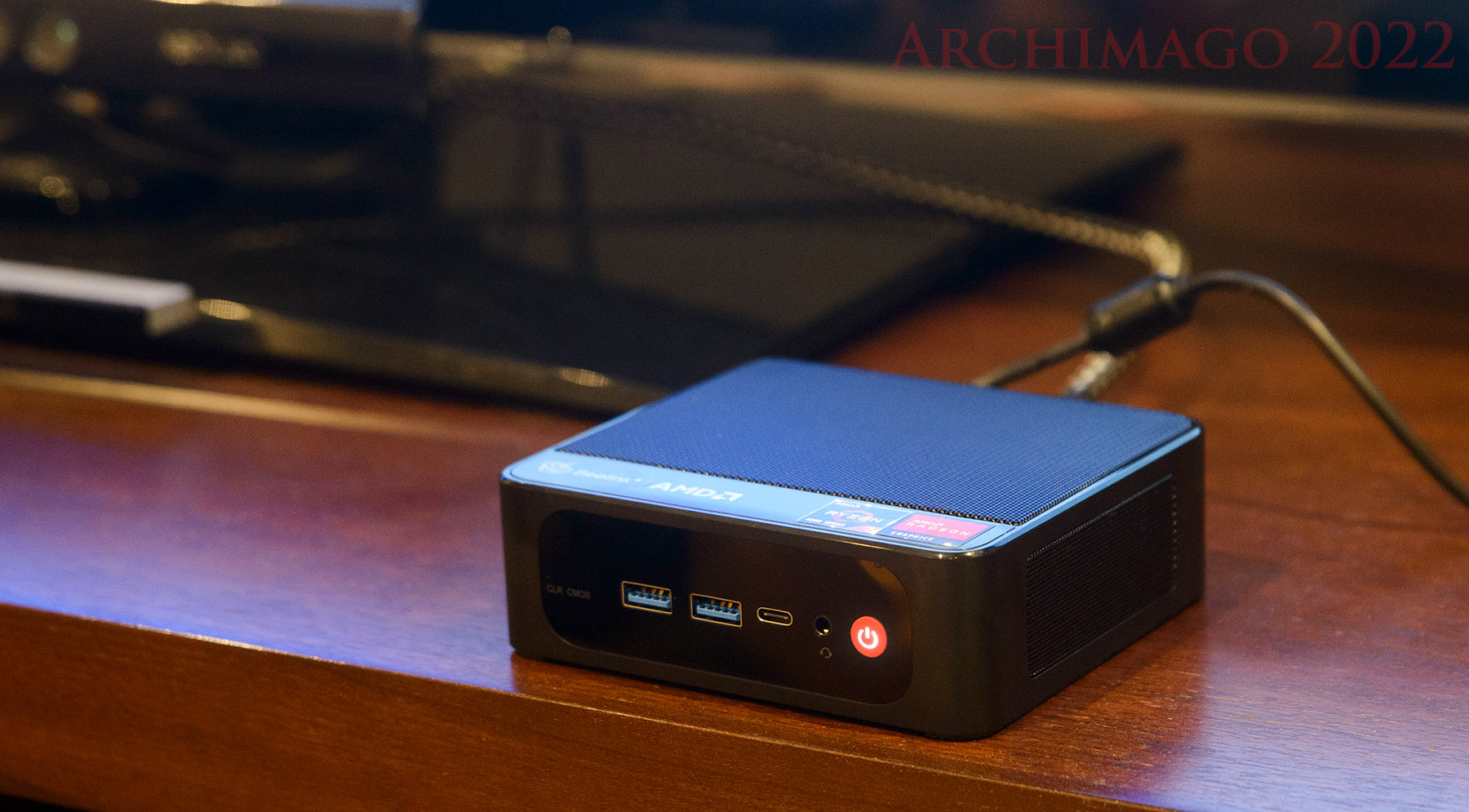
REVIEW: Beelink SER4 Ryzen 7 4700U (8C/8T) MiniPC - A small, quiet, fast, general "workhorse" PC... [Addendum: HDR works.]
These days, if we look around most homes, I think we'll see all kinds of computers used for different purposes in the rooms. I've talked about my main Workstation, the Server machine, even my Gaming rig a number of years back (much of that upgraded since). And a few months ago, we talked about the very low power fanless Celeron MeLE Quieter2Q which functions as a very stable stereo/multichannel streamer for Roon.
[BTW, there is an upgraded MeLE Quieter3Q now which is faster by ~30-40% featuring the Celeron N5105 processor for a few more dollars, but still no AVX2 if you're thinking about Windows HQPlayer as discussed here.]
Recently, I've been wanting to upgrade my 2016 Intel NUC 6i5SYH which in the last few years has been the heart of the audio measurements rig. Over time, as my measurement regimen has become more detailed, often using larger FFTs parameters, once awhile, I've started noticing that the old i5 CPU isn't keeping up with the processing needs and this shows up as glitches in the data such as when running multichannel REW "stepped sine" captures. Obviously, this will not do. ;-)
To remedy the situation, I got one of these Beelink SER4 Ryzen 7 4700U-based MiniPCs (8-core, 8-threads, currently less than US$450 for the 16GB RAM/512GB M.2 SSD model). There is also a more expensive SER4 with faster 4800U processor (8-core, 16-threads) if you need that extra speed.
This machine was purchased from standard retail channels; this review was not sponsored in any way.
Friday, 1 July 2022
Hi-Res THD(+N) vs. Output Level Measurements (ESS "HyperStream" vs. AKM vs. TI/Burr-Brown). And a bonus R-2R!
Notice last time as I ended off the post, I showed what I think is an interesting "high resolution" graph of THD(+N) vs. Output Level for the Topping D10 Balanced which uses the ESS ES9038Q2M chip. This was spurred on after some discussions on glitches and anomalies one might see due to the "HyperStream" architecture of the ESS chip.
These days, other than the occasional fully multibit or discrete R-2R DACs, the vast majority of what we're using are multibit/multilevel sigma-delta devices. This includes the brands I have listed in the upper graphic; Asahi Kasei Microdevices (AKM), ESS Technology, and Burr-Brown (which was acquired by Texas Instruments in 2000). We'll also talk about the Philips later. ;-)
Today, let's have a look at "high res" THD(+N) vs. Output graphs (XLR output where possible to keep noise as low as possible) comparing different DACs from these companies...
Saturday, 25 June 2022
REVIEW: S.M.S.L. DO100 DAC [Part III - DSD, Subjective, AMPT Recording, and Conclusions]. And a very close look at the Topping D10 Balanced THD(+N) vs. Level graph.
![]() |
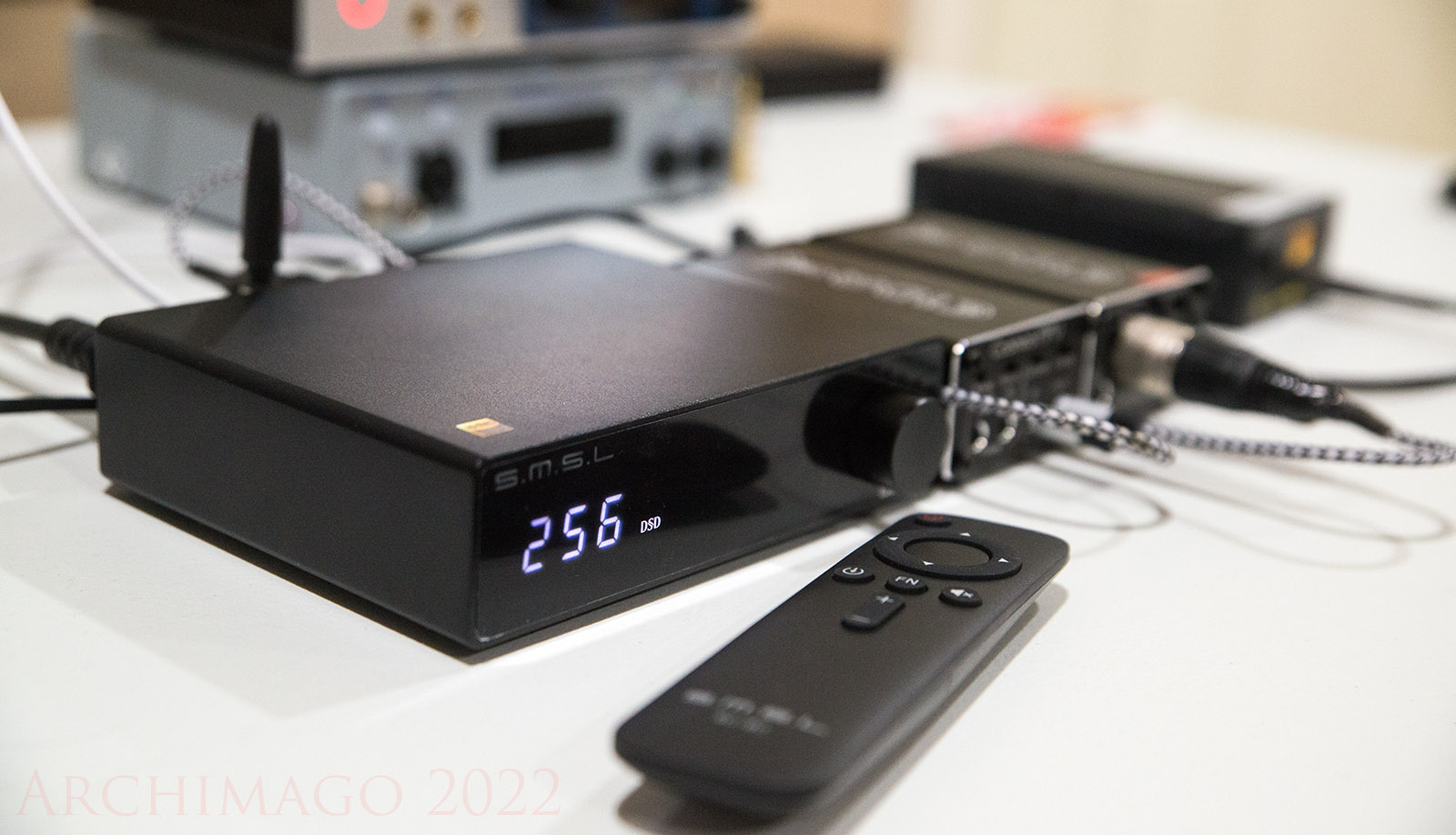
| As you can see, the SMSL DO100 displays DSD samplerate in the form of DSD64 (64 x 44.1kHz = 2.8MHz), DSD128 (5.6MHz), DSD256 (11.3MHz) and DSD512 (22.6MHz). |
Saturday, 18 June 2022
Notes on DAC DSD (1-bit PDM) measurements going forward...
From the beginning, there were concerns about this push towards 1-bit systems into the consumer space along with claims that 1-bit PDM should form some kind of archival foundation for music. There were critics include Lipshitz and Vanderkooy - see their paper "Why Professional 1-Bit Sigma-Delta Conversion is a Bad Idea" from the September 2000 AES. And the next year in May 2001, they followed up with "Why 1-Bit Sigma-Delta Conversion is Unsuitable for High-Quality Applications". Even Bob Stuart chimed in on the unsuitability of DSD for "high-resolution audio" back in 2004. This is no surprise since Meridian was firmly with DVD-A including developing the MLP compression system which subsequently has been licensed by Dolby and renamed TrueHD; it looks like Dolby and Meridian had an arrangement dating back even to 1998.
These concerns around fidelity and the unsuitability of 1-bit PDM as an editable format in audio production are why in the professional world, we see audio recorded and edited in 24/352.8 "DXD" and Sony's own "DSD-Wide" (8-bit/2.8MHz) instead of DSD64/1-bit "DSD-Narrow".
While this was playing out in the academic/professional arena, the advertising industry including the "mainstream audiophile media" championed DSD and published all kinds of flowery words suggesting how it sounded "more natural", or "analogue-like" compared to PCM. While I don't think we can put an exact date on when DVD-Audio officially died as a viable commercial product, I think by 2005 it was quite clear that hi-res physical formats were not going to be mainstream and DVD-A did not have the number of titles available compared to SACD. My sense is that the hybrid-SACD feature with both DSD and CD-compatible layers was a major differentiating factor that has resulted in still a trickle of SACDs released these days.
I'm bring this stuff up now as an extension to the discussions around SoX-DSD and the Philips Test SACD articles last year during my series on the Topping D90SE review because I've been thinking about how best to standardize the DSD test signals I use when testing. Different DACs tend to handle DSD playback differently and I wanted to make sure that my test signal parameters are at least somewhat in line with the music encoded on an SACD or maybe DSD128 download these days.
Saturday, 11 June 2022
REVIEW: S.M.S.L. DO100 DAC [Part II - PCM Resolution]. (And on MQA's distasteful environmental claims...)
As we continue to evaluate the S.M.S.L. DO100 DAC, let's spend time today delving into the resolution that this machine provides as a PCM DAC (see Part I last week for filters and jitter performance). Given that PCM is the de facto digital modulation scheme, this post will form the heart of DAC performance evaluations. We'll leave DSD to Part III along with discussions of subjective performance.
With PCM data, this DAC will accept up to 32/768. Let's run some tests as per usual to see how this device compares to others I've looked at on this blog. For most of the tests, I will use my Raspberry Pi 4 "Touch" (USB) or a Logitech Squeezebox Touch (S/PDIF) as digital source. The E1DA Cosmos ADC will be used with or without the Cosmos APU to measure. For some of the REW-based tests, I will perform a simple loopback that looks like this:
Intel NUC → SMSL DO100 DAC → [Cosmos APU] → Cosmos ADC → Intel NUC
As usual, all cables are generic RCA when testing unbalanced, for XLR measurements 6' Monoprice Stage Rights were used.
Unless otherwise noted, the DO100 will be set-up to use "FL6" Linear Steep filter.
Without further ado, let's jump to it...
Saturday, 4 June 2022
REVIEW: S.M.S.L. DO100 DAC (dual ESS ES9038Q2M) [Part I - Overview, Filters & Jitter]. (And the likely continued contraction of MQA...)
Over the last number of years, we have seen a proliferation of DACs from Chinese manufacturers offering models of increasingly better resolution - higher fidelity - and greater feature set. These days, I am of the opinion that we have achieved way above and beyond the ability for human hearing to differentiate these machines unless the manufacturers purposely added some kind of "coloration" to the analogue output whether it be frequency response or changes to the noise and distortion levels (the "tube sound" being a prototypical example we may come across).
As you can see in the image above, we have the S.M.S.L. DO100 DAC (~US$250) in today for review. I bought this unit through retail channels and intend to either use it myself or give it away if I have no need for it.
For many devices these days, opening the manual will show us technical information like the frequency response of the filters in this example. I think this is a nice evolution among manufacturers recognizing that showing product performance is important to educated customers with graphs and technical details rather than mere prose which often provides little satisfaction for the consumer's intellect.
Today, let's start a multi-part look at this DAC; no need to hurry because I think the performance at this price point warrants serious consideration and the many ways and features one can gather performance metrics on (I don't promise to test everything of course!). Obviously it's not an expensive device, has a remote controller, has both unbalanced RCA and balanced XLR outputs, Bluetooth 5.0 input, capable of up to 32/768 PCM and DSD512 (1-bit, 22.6MHz) using USB 2.0, along with S/PDIF TosLink and Coaxial inputs for up to 24/192 and DoP DSD64. No money wasted on MQA licensing. Depending on what we find, this might be right for you...