Showing posts with label SSD. Show all posts

Saturday, 11 November 2023

Why not? 😉 AMD Ryzen 9 5950X Workstation & Ryzen 7 5700X Gaming CPU upgrades. Slowing pace of obsolescence & hardware waste for Windows 11 compatibility?

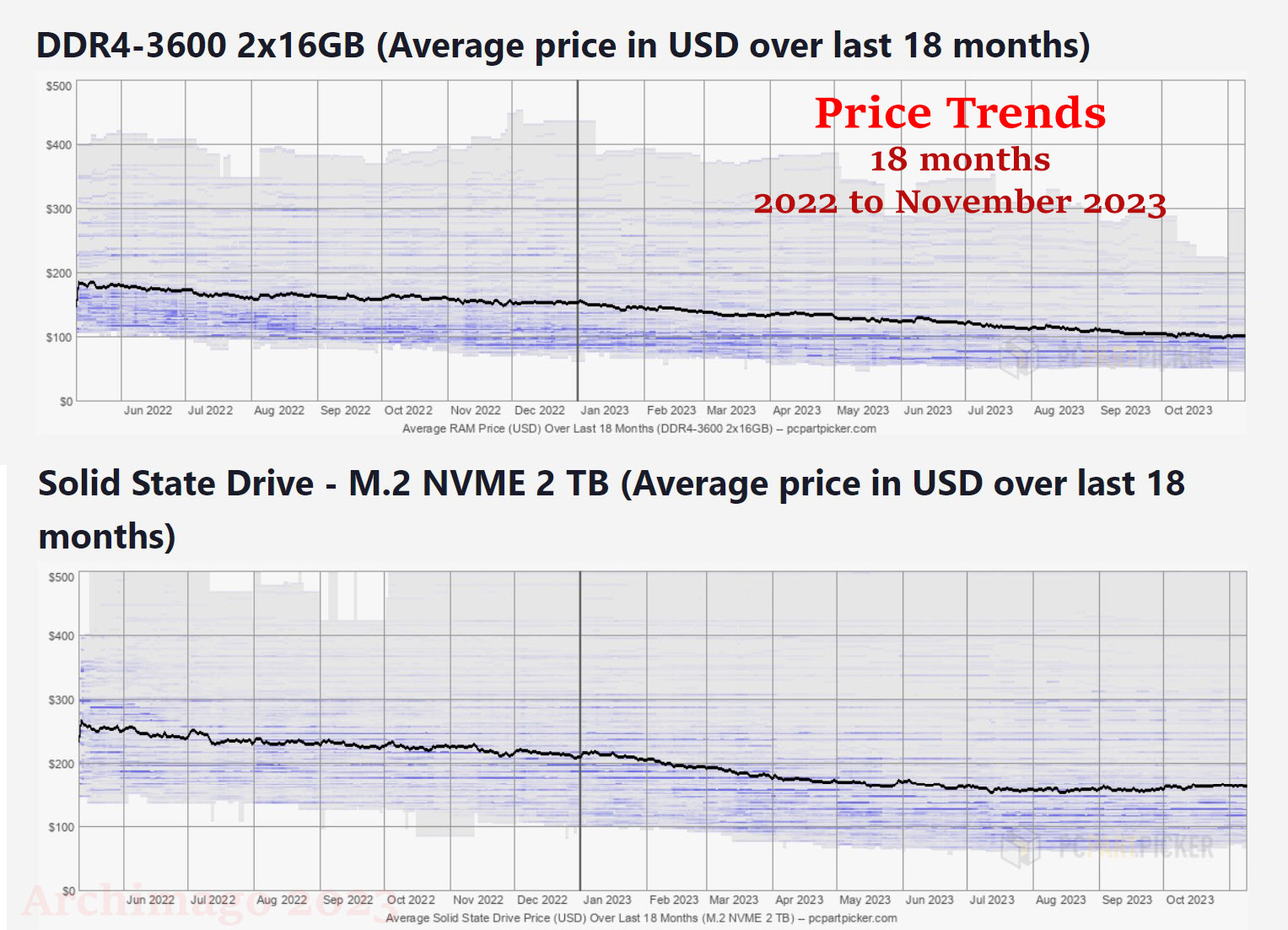
Although typically I write about audio stuff on these blog pages, not infrequently I'll talk about my computer updates as well. Looking back, this has allowed me to review the journey along the way over the last decade. As we enter into the Christmas season this year, I think this is a good time to be looking at computer parts as prices of things like SSD drives and DRAM in particular seem to be very attractive with DDR4 and DDR5 memory trending down, M.2 SSD likewise appearing to be bottoming over the last 18 months perhaps as the cost of basic necessities (food, housing, gas) have risen and disposable income reduced. I would not be surprised if inflation starts to drop in 2024 while the electronics parts rise in price again.

Who knows exactly what the future brings, but this looks like one of the best time to grab something like a 2TB M.2 SSD or some RAM:
The trend isn't as obvious with CPU prices. However, I upgraded my Workstation computer recently to the AMD Ryzen 9 5950X CPU - 16-cores, 32-threads I found at a decent price. And since it has been ages, I also updated my Gaming PC in the living room for the heck of it to the Ryzen 7 5700X.

Saturday, 16 September 2023

As We Hear It: On requesting artists/albums to streaming services. (Plus adding more RAM and larger SSD to the computer workstation.)

Hey everyone, life's been very busy so not much time to think or work on audio stuff.

A few weeks back in my discussion of Qobuz in Canada, I said: "I'm curious, has anyone out there contacted their streaming service to request the addition of an artist or album? Were you able to get your requests included?"

Well, I received a number of responses, mostly from folks who were happy that Qobuz or TIDAL were able to oblige with putting their requests up. Here's a very well written one that I thought would be good to share with everyone... It brings up important points especially these days as we transition into more music lovers depending on the services to supply our music. Many, including myself these days are collecting more playlists than actual physical albums or spending the time to download anymore.

Saturday, 30 October 2021

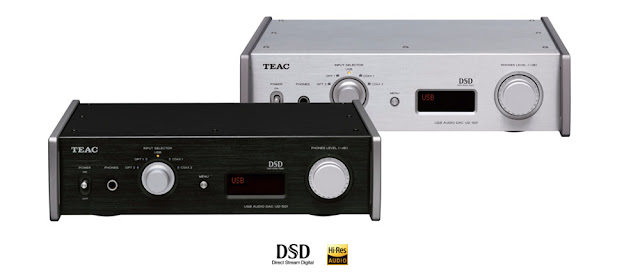
Revisiting the TEAC UD-501 DAC (2013): THD(+N), DSD output, Sweeps, Jitter, 1/10 Decade Multitone 32. (And on SSD transition, Corsair MX500 SSD, and Hi-Fi+ closes comments...)

After Bennet/Dtmer Hk's comment on this previous post, I thought it might be interesting to revisit my longtime friend, the TEAC UD-501 DAC that I bought new when it came out in 2013. My preview and measurements (Part 2 PCM, Part 3 DSD) are still online of course.

I still remember doing those measurements in my previous home - it feels so long ago! ;-)

These days with the E1DA Cosmos ADC and RME ADI-2 Pro FS available for measurements, let's take a trip down memory lane at what has been over the years a reference DAC for me. I think the TEAC UD-501 is a special device that ushered in for many audiophiles a cost-effective, high resolution, well-built, reliable, low jitter, asynchronous USB audio interface which I suspect has influenced the design and performance of other DACs over the years.

Spec-wise, it was one of the first to catch my interest with the ability to handle PCM 384kHz and DSD128. The high quality metal case looks serious. It's based on a dual-mono TI/Burr-Brown PCM1795 configuration with dual toroidal linear power supplies. There are a number of PCM and DSD filters including the ability to turn off the 8x oversampling and allow "NOS" (Non-OverSampling) mode. The quad JRC MUSES8920 opamps they used were also another "feature" talking point back then. (Quite a complete specs page here for the TEAC.)

Saturday, 24 July 2021

Mega-taps upsampling: Remastero's Pan Galactic Gargle Blaster (PGGB) software. (Broadly on audiophile software & the noise boogeyman.)

This article came about after I received an E-mail from an audiophile friend who saw this Audiophile Style thread in praise of "math and magic". It links to a piece of software by a site called remastero, and the program itself is called "PGGB" (Pan Galactic Gargle Blaster), obviously referring to The Hitchhiker's Guide To The Galaxy with the main author named Zaphod Beeblebrox (who in the book is also the ex-president of the Galaxy). Cute, and of course the number "42" features prominently here and there.

In the past, we have talked about "audiophile" software that supposedly affect sound quality. Years ago, we talked about bit-perfect players (Windows, Mac) and really how "bit-perfect" is simply "bit-perfect" regardless of what software is used. We discussed questionable programs like JPLAY. Then there are the OS tweaks like Fidelizer. Neither JPLAY nor Fidelizer made any difference in my testing or listening.

That is not to say software doesn't make a difference at all. With the computing power we have these days, we can certainly perform highly precise filtering and DSD-PCM transcoding - like with HQPlayer

The idea with PGGB is that this is software that will take (in batch) various tracks you have and convert these to upsampled versions like 24/384 or 32/705.6 or even higher. In the process, applying very strong filtering (eg. on the order of >200M-taps sinc filter for some of the tests we'll run here, very impressive big number, right?). Furthermore, the website states that the software can apply settings for various levels of "transparency", apply HF noise filtering, uses noise shaping, adjusts gain monitoring for intersample overs, deal with convolution filters, and an apodizing setting. That's a bit of stuff so I won't promise that we'll hit on all these here. My intent is to at least have a good look at the foundation of the upsampling effect and the EQ function.

Saturday, 1 May 2021

MEASUREMENTS: Sennheiser HD650 (~2010-2012) and HD800 (~2010). A comparison of two "Reference Class" headphones, and a look/listen to the "Sennheiser veil / darkness". [Inexpensive 2TB SSD and inflation in consumer electronics...]

As you can see in the picture above, this is a bit of what the "box opening" looks like when you buy either one of these "Reference Class" Sennheiser headphones.

Much has already been said about the headphones being measured today. The Sennheiser HD650 was originally released back in 2003. Of interest historically, there was a fire in the Ireland factory back in 2004 so there probably are not many older pre-fire HD650's floating out there. Tyll Hertsens' article about the Sennheiser HD580/600/650 is a great summary and SolderDude has a ton of stuff on the HD650 on DIY-Audio-Heaven. SBAF has this "compendium" on the HD650 which I think covers everything... and more! Oh yeah, even NwAvGuy got one of these back in 2011.

These days, there's the Massdrop x Sennheiser HD6XX which would be the latest version of the HD650 discussed here, while the Sennheiser HD660S looks similar but has redesigned drivers.

Likewise, you already no doubt would have read about the Sennheiser HD800 over the years. These came out in 2009, sporting the large 56mm "ring radiator" driver (vs. 42mm transducer of the HD650). The HD800 has since been revised with the HD800S in 2016 (here's Tyll's take with mods discussions). Multiple reviews on Head-Fi. The HD800S sounds very similar to the HD800 to me.

For this post, let's look at measurements comparing the two and I'll put in my 2¢ on the sonic differences as I hear them.