Showing posts with label Audiophile Network. Show all posts

Saturday, 10 August 2024

2.5Gbps Ethernet in the Sound Room... (D-Link DMS-106XT & GigaPlus S25-0802 2.5G Smart Switch). And a quick peek in the Headphone Bar & Red Cat Records.

On occasion, I get a kick out of reading the audiophile media's review of ethernet switches. These are perhaps some of the most hilarious pseudo-infomercials out there as companies try to justify their highly expensive network switches in the hopes of capturing the interest of the few audiophiles who still somehow do not realize that there's no benefit to these devices (even Paul McGowan agrees, imagine that!).

Feel free to check out the reviews of such things like the Silent Angel Bonn NX Pro Ethernet Switch (asking US$4000!), or filters like the Network Acoustic Muon Pro (asking £1,329.17!). There are also now Chinese companies that make these things for audiophiles - Gustard N18 (US$370 - only 2 ethernet ports + 1 gigabit SFP) and N18 Pro (US$530 - 5 ethernet + 1 gigabit SFP) for example; sure, they're cheaper but that's still quite a bit for what you get which is just a nice looking ethernet switch with integrated power supply and an essentially meaningless 10MHz clock input! (Timing is essential inside the DAC for precise conversion to analog output, not the network switch.)

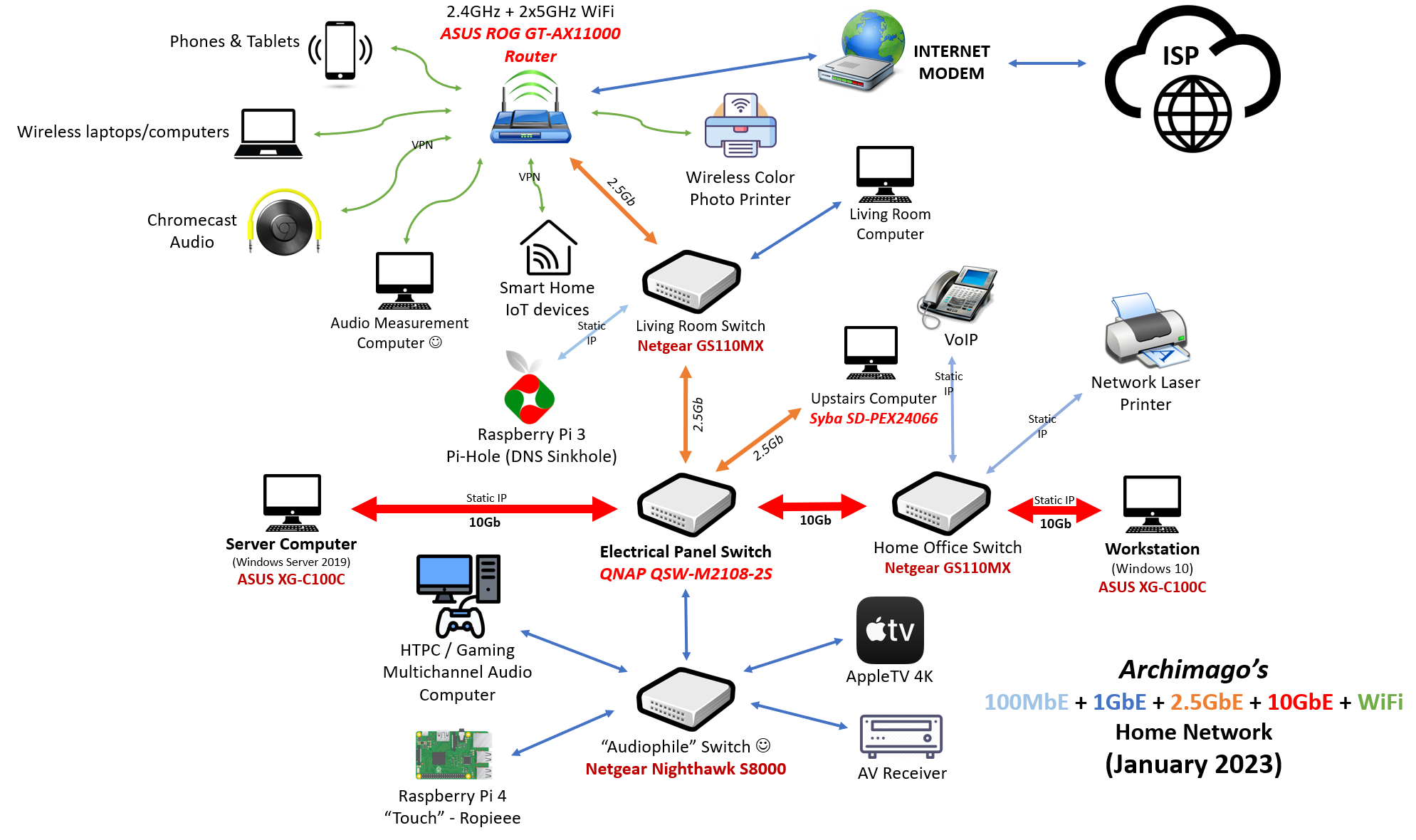
A few years ago (2020), I talked about the Netgear Nighthawk S8000 as a great choice for a high quality ethernet switch which affords features including port priority. Hey, it's still a great little switch and I see that sometimes there's still stock available on Amazon.  Over the years, I've upgraded my home network beyond 1Gbps (and update here) so I figured let's find faster switches to try out for the sound/media room.

Here are two easily available and not expensive options: the D-Link DMS-106XT (US$200), with 10GbE high-speed port to connect to your main network plus 5 x 2.5GbE ports for downstream devices with user-defined port priority, and the very inexpensive GigaPlus S25-0802 2.5G Smart Switch (US$80), an 8-port 2.5GbE switch with 2 x 10Gbps SFP+ for those who want to use fiber networking, or possibly 10GbE RJ45 multigigabit transceivers (some very inexpensive like this).

Both are fanless - essential for the sound room.

Sunday, 4 February 2024

Computer Parts: Marvell AQC113C 10GbE network card (QFly NIC-10G), PCIe x4 riser, and 7-port USB3 PCIe x1 Card.

Over the years, I've written about transitioning to faster ethernet here at home with standard copper 10GBASE-T (10GbE) cabling, beginning back in 2018. This works fine even with Cat-5e in the walls of my home (although some renovations use Cat-6). More recently, my home network was upgraded to 2.5GbE for any device that can benefit, with standard 1 gigabit/s fallback.

Last month, I needed another 10GbE network interface card (NIC) and noticed that we're now seeing inexpensive Marvell mGig AQC113C NICs available, upgrades from the AQC107 cards I have been using. So I grabbed a QFly NIC-10G (~US$75) to try out. There are other similar products like the NICGIGA (very unfortunate name), and GigaPlus.

The card offers 10G/5G/2.5/1GbE speeds and below (100/10Mbps) for compatibility. The new chip operates at only 4W running 10G speed (I believe the AQC107 is estimated at ~6W) making it even cooler-running for heavy loads.

Saturday, 14 January 2023

Home Network: Update on mixed 10 gigabit network, Roon stability & value? (And a quick look at Pi-Hole.)

Happy 2023, dear audiophiles!

While I typically publish articles like measurements of audio hardware, discuss albums (usually as part of reviews or examination of things like dynamic range), and offer critiques about extreme "High End" audiophilia, every once awhile I'll talk more generally about my computer hardware and local area network (LAN). I see the network stuff as part of a broader foundation of the modern digital audio system which simply has to work reliably and efficiently for digital streaming/computer audiophiles. Like other parts of the "perfectionist" audiophile system (like say the room which is often also neglected in audiophile hardware talk), this should be optimized for best performance such that those using it will not have to suffer from speed issues or dropouts. Sometimes it's easier said than done given potential interoperability nuances of the multitudes of network hardware!

Apart from silly "audiophile ethernet switches", or "audiophile ethernet cables", there's generally nothing specific to sell to audiophiles when it comes to home network hardware. As a result, it's atypical to see long articles at audiophile websites or in the magazines about this stuff despite the importance.

As a reminder, in my experience, unless we're dealing with faulty gear, "Bits Are Bits" when it comes to sound quality - that's just reality if you take the time to analyze the audio signal objectively or run some controlled listening trials. Despite all kinds of subjective voices/claims out there otherwise, high performance modern computer networks are simply not going to change the sound of audio playback so long as they're reliably "bit-perfect". After all these years, I find no reason to be concerned about ethernet cables, or switches transferring packet data around. Whether the data is of audio content or otherwise is irrelevant - the network doesn't care whether it's audio meant for the DAC or pixels aimed at the printer.

Digital data, given how it's packaged and transmitted, when corrupted will result in rather obvious audible anomalies if not corrected (like an error-prone USB cable). You will not hear subtle changes (like "more bass" or "better soundstage" or even more vaguely "improved presence") as some reviewers seem to promote when hyping nonsensical claims of what they supposedly "heard".

Saturday, 1 October 2022

Aquantia/Marvell AQC107 10GbE Network Cards (eg. ASUS XG-C1001C): Driver and Firmware updates and improving stability. (And more audiophile ethernet snake oil warnings.) [Update: Reduce latency for Roon audio playback.]

While this blog is primarily about audiophile stuff, over the years I have discussed modern audiophile systems including thoughts on networks. Like it or not, computer audio/video is ubiquitous and probably has become the primary source of access for many of us these days (rather than deal with physical media). Furthermore, a fast, responsive, reliable home network is almost essential as a foundational "utility" for entertainment and work. As discussed back in 2018, I've been running 10 gigabit/s home ethernet (standard copper RJ45 Cat-5e/6) with an update to the ASUS router and QNAP switch infrastructure in 2021.

In 2022, when it comes to very high-speed computer network cards, the Aquantia/Marvell AQtion AQC107 chipset devices remain attractive due to reasonable price, PCIe 3.0 x4 compatibility, and ability to run at 2.5/5 gigabit intermediate speeds (also dropping down to 1Gbps and 100Mbps as needed of course). Over the years, I've seen comments online with frustrations around the popular cards like my ASUS XG-C1001C shown above. The issues are typically described as episodic disconnects usually for about 5 seconds (discussed herehere) and then coming back online. As you can imagine, this will lead to a time-out of network transmissions.

Depending on the application, this might or might not lead to problems. For audio and videophiles, this is a problem when we're streaming video to something like an AppleTV or playing music off Roon in real-time. Other apps may be more tolerant and can just wait a little longer and retry.

Saturday, 24 April 2021

Home Network: The ASUS ROG Rapture GT-AX11000 WiFi-6 Router & QNAP QSW-M2108-2C mixed 2.5GbE + 10GbE switch. (Internet jitter and "one number" audio objectivism.)


QNAP multi-gigabit switch being installed behind the basement home electrical panel.

Well guys & gals, it seems like every year, I'll post at least an article on computer networking.

I know, this isn't specifically audiophile-related but for us computer/streaming digital audiophiles, that computer network infrastructure we run at home is important and certainly being home-bound in the midst of the COVID-19 pandemic, a smoothly running network has become even more important for work, education, socialization and play these days.

So with both my kids now teenagers in high school, myself and the wife having to do more work from home, and the ongoing (exhausting) use of video conferencing, I figure I might as well optimize the system and hopefully forego thinking about this for a few years. ;-)

So today, let's talk about wireless, router features, and multi-gig wired home ethernet.

The top image is my new WiFi router. The 4lb, 802.11ax "Wi-Fi 6" capable, tri-band (2.4 + dual-5GHz), up to 160MHz bandwidth in 5GHz, DFS, 12-stream, 8-antennae, 1.8GHz quad ARMv8 64-bit cores, 1GB RAM, 256MB firmware, 2.5GbE-port, ASUS ROG Rapture GT-AX11000; from now on I'll just call it the "GT-AX11000".

Saturday, 29 August 2020

SUMMER MUSINGS: Modern Tech Life; obligatory home computer mechanic - NVMe replacement, WiFi Router. And thoughts about "high end", high priced DACs and value (Recent Darko & Sircom).


I was actually planning to just take a little break this week but given that it's almost September, I'll be away for Labour Day and school's starting for the kids with likely some virtual elements, I thought I'd just pen a not-too-long post not so much about audio but rather the highly computer-dependent world we're living in (with a bit about audiophile stuff to end).

Tuesday, 19 May 2020

MUSINGS/MEASUREMENTS: Netgear Nighthawk S8000 (and audiophile ethernet switches)

Netgear Nighthawk S8000 GS808ES (~US$95).
Over the years, as "Distributed Computer Audio" setups have became the main music playback mechanism for many of us, audiophile companies have released various products supposedly to enhance each component in the computer system.

Last week, we talked about an expensive audiophile server computer for example. As you know, over the years, USB cables, hub-like "regenerators", "filters" and "reclockers" have been released by companies. "Audiophile" ethernet cables likewise have been on the market for many years now.

I suppose it was just a matter of time that ethernet switches became a target for the small audiophile cottage industry with products like the SOtM sNH-10G (US$800), JCAT M12 Gold Switch (€4165) and less expensive M12 Magic (€2550), UpTone EtherREGEN (US$640), Paul Pang modified switch (€279) based on D-Link DGS-108 (US$30), AQVOX SE Switch (US$950) also based on D-Link DGS-108 I think, Crux Audio Silent Angel Bonn N8 (US$399), Fidelizer Etherstream (US$395) based on Cisco SG110D-08 (<US$50), Melco S100 (£1999), Linear Solution OCXO Audiophile Switch 2.0 (?US$500) that looks like it's based on TP-Link TL-SG108 (~US$20), expensive line of Ansuz PowerSwitches among a few other options.

Saturday, 9 May 2020

MUSINGS: Windows Server 2019 update, RSC performance issues with Aquantia 10GbE AQC107, and expensive audiophile server computers (like the Wolf Audio Alpha 3 SX)...


Hey everyone, as mentioned last time, this past week I've been updating my Server computer (Intel i7-7700K based, 32GB machine) over to Windows Server 2019 Standard. It has been a few years since updating to Server 2016 which was an upgrade from Server 2012 R2 before that and Server 2012 initially installed in 2013! I figure it was about time to back-up all the essential data and totally start fresh. Some of the hard disks are 10 years old (a couple of Western Digital Greens and Red drives) and also on my list to be replaced soon. As you've probably experienced, while Windows has improved significantly, over years of use, it can bog down with inefficiencies from old installs hanging around. While maintaining IT stuff is generally not much fun, like "spring cleaning", it's necessary...

My choice for the Server operating system is due to some work related functions (web serving) I needed for this machine - stability, speed and security are more important than application compatibility. In that regard the Windows Server family has over the years proved to be reliable. For my audio and video server needs, as a platform to run RoonServer and as a fast NAS, the speed is certainly appreciated.

Sunday, 22 April 2018

MEASUREMENTS: Going 10 Gigabits/s home ethernet (10GbE) on Cat-5e cables. (ASUS XG-C100C cards & Netgear GS110MX switches)


Over the years, I have upgraded many parts of my computer system. New motherboards go in and out, new CPUs updated, more advanced GPUs, gigs of RAM, faster and higher storage size hard drives and SSDs...

A few months back, I mentioned that one of the more "boring" parts of the computer system with little actual need for updating has been the wired network system. I have not significantly upgraded anything in many years. While I suspect many of us over the last decade have upgraded our home ethernet systems to 1 gigabit/s ethernet (1GbE), since the mid-2000's, 10 gigabit/s speed has been waiting in the wings for larger scale adoption. In business and enterprise settings, one may have already seen fibre-optic networks (for example, those using enhanced Small Form Factor [SFP+] connectors), but 10GbE in the form of standard copper modular RJ-45 8P8C connectors (also known has 10GBASE-T) has been talked about since 2006 with relatively few of us I suspect incorporating the technology into the home yet (in early 2018). The price point is only starting to dip into consumer territory.

Sunday, 1 May 2016

MEASUREMENTS: Music servers possibly using UDP packets? Issues for music streaming?

Original from Obaida's Blog.
Qmax last week raised an interesting question about UDP (User Datagram Protocol) and DLNA/UPnP servers, one of the basic "Transport Layer" protocols for data transmissions used for Internet communications. We are likely very familiar with TCP (Transmission Control Protocol) in our day-to-day lives. This is the transport protocol that carries data off our NAS drives, transmits the web pages we read, and ensures integrity of our E-mail data...

What we might not be as familiar with is this other UDP protocol of communication. Whereas TCP is "connection-oriented" and "unicast" sending data between a server and a client through handshaking, UDP is a "connectionless" system where data is "streamed" across the network with potentially multiple destination addresses ("multicast") but without a need for bidirectional communications to address re-transmission in the event of errors detected in the stream. UDP is typically used in broadcast streams like Internet radio, streaming video, VOIP telephony, and multiplayer video gaming because the occasional data error is acceptable and doesn't require re-transmission. Or in the situation with video games, it's all happening in real-time and it's actually preferable to drop a packet here and there than waste time re-transmitting and potentially causing a deterioration in the action. Another use for UDP is with DNS service using small packets. It's faster, and uses less data bandwidth across the worldwide network overall.

Saturday, 21 February 2015

MEASUREMENTS: The Intercontinental Internet Audio Streaming Test...

Time to go intercontinental. :-) [Scene from the old movie War Games.]

After the ethernet cable results last week and the absence of any difference, there was discussion about an extreme internet music server test. What if instead of maybe 100 feet of ethernet cable from server to player, we had thousands of miles of cables in between?

With help from Mnyb from the Squeezebox Forum, we were able to orchestrate a test to demonstrate the extremes of measured performance with the server system basically on the other side of the world. He lives out in Västerås, Sweden approximately 100 km from Stockholm. A direct distance of: