Greetings all. For this post, as you can see above, I've got something exotic to review / measure here at chez Archimago. It's a Pass Labs / First Watt SIT-2 stereo amplifier which was made in limited quantities back around 2011-2013.
A 'more objective' take for Rational Audiophiles. Among other topics!
X/Twitter: @Archimago
E-Mail: archimagosmusings(at)outlook.com
[Some items linked to affiliate accounts - I may receive gift certs from qualifying purchases.]
Well, as I've mentioned previously, I don't really need more headphones. ;-) Alas, I could not resist picking up these minty Drop + HIFIMAN HE-4XX Planar Magnetics locally used at a price I could not refuse! I also love how they look with the classic headband. The matte "midnight blue" color looks like a dark charcoal with a subtle powder bluish tinge.
I know there have been different opinions on the build quality of these headphones. Some of the early units had issues with right-left imbalance, driver failures, and broken hinges. According to this post, it looks like replacements with serial number 5XXX have many issues fixed. My unit here has serial number 57XX.
The hinge where it interfaces with the headband feels robust on this unit and I think the build quality is very good. The steel gimbal and metal sliders seem like they will be able to hold up to daily use. No complaints there. I did have an issue with the part interfacing the ear cup which I'll discuss below.
The stock cable is a little short for my taste at around 5'/1.5m (6' would be better for my desktop use). Notice that the cable is angled 90°, terminated with a 3.5mm connector which is fine for mobile use. I think a straight cable would have been preferred since most buyers would likely be using these open headphones at home almost exclusively. I like the soft, pliable nature of the cable although I have read some complaints that it can kink and fail. I don't think there's an issue, replacements are not expensive anyway.
Hey ladies and gents, let's switch from discussing headphones this week and have a look and listen at some speakers.
You've probably seen speakers like the ones above over the years. These are the "iconic" Gallo Acoustics A'Diva Ti speakers from the UK. These specific ones are probably something like 16 years old and the 5" diameter A'Diva orb (with 3" driver) is in fact the larger of the 2 speakers from Gallo we'll be talking about today.
Here's the smaller 4" diameter (also 3" driver) little brother - the Nucleus Micro. Note that this is the "non-Ti" version which is from the previous generation, made around year 2000 with presumably a different driver. Unlike the stainless steel protective grille of the A'Diva, the fabric grille is easily removed for photography:
A couple weeks back, I measured the Dekoni Blue headphone which as I noted, is itself a "modded" Fostex T50RP Mk 3 planar-magnetic (aka "Regular Phase", aka "isodynamic") headphone. It would be completely remiss of me if in a review/discussion of the Dekoni/Fostex I were not to spend some time talking about modding!
Modding has an very long tradition in the 'head-fi' world and I think it's been generally recognized that the Fostex headphones are the classic headphones to perform surgeries on. Much of what I'll be talking about here will be nothing new to those deep into this stuff already. For more on modding, check out this Headphonesty article for a background.
To start, as always, we need a plan and a "vision". As I mentioned in the last article, the Dekoni Blue sounds pretty good for the most part, so my job isn't to change the performance completely, but to rather refine what is there. If a headphone sound highly objectionable, one should really just move on and buy something else! Let's review the measurements I published last time for the Dekoni Blue with the supplied earpads and see what we can try...
As you can see in the picture above, this is a bit of what the "box opening" looks like when you buy either one of these "Reference Class" Sennheiser headphones.
Much has already been said about the headphones being measured today. The Sennheiser HD650 was originally released back in 2003. Of interest historically, there was a fire in the Ireland factory back in 2004 so there probably are not many older pre-fire HD650's floating out there. Tyll Hertsens' article about the Sennheiser HD580/600/650 is a great summary and SolderDude has a ton of stuff on the HD650 on DIY-Audio-Heaven. SBAF has this "compendium" on the HD650 which I think covers everything... and more! Oh yeah, even NwAvGuy got one of these back in 2011.
These days, there's the Massdrop x Sennheiser HD6XX which would be the latest version of the HD650 discussed here, while the Sennheiser HD660S looks similar but has redesigned drivers.
Likewise, you already no doubt would have read about the Sennheiser HD800 over the years. These came out in 2009, sporting the large 56mm "ring radiator" driver (vs. 42mm transducer of the HD650). The HD800 has since been revised with the HD800S in 2016 (here's Tyll's take with mods discussions). Multiple reviews on Head-Fi. The HD800S sounds very similar to the HD800 to me.
For this post, let's look at measurements comparing the two and I'll put in my 2¢ on the sonic differences as I hear them.
![]() |
| QNAP multi-gigabit switch being installed behind the basement home electrical panel. |
Well guys & gals, it seems like every year, I'll post at least an article on computer networking.
I know, this isn't specifically audiophile-related but for us computer/streaming digital audiophiles, that computer network infrastructure we run at home is important and certainly being home-bound in the midst of the COVID-19 pandemic, a smoothly running network has become even more important for work, education, socialization and play these days.
So with both my kids now teenagers in high school, myself and the wife having to do more work from home, and the ongoing (exhausting) use of video conferencing, I figure I might as well optimize the system and hopefully forego thinking about this for a few years. ;-)
So today, let's talk about wireless, router features, and multi-gig wired home ethernet.
The top image is my new WiFi router. The 4lb, 802.11ax "Wi-Fi 6" capable, tri-band (2.4 + dual-5GHz), up to 160MHz bandwidth in 5GHz, DFS, 12-stream, 8-antennae, 1.8GHz quad ARMv8 64-bit cores, 1GB RAM, 256MB firmware, 2.5GbE-port, ASUS ROG Rapture GT-AX11000; from now on I'll just call it the "GT-AX11000".
First let me show you some pictures of these particular headphones, and later, we'll get into measurements with the inexpensive miniDSP (H)EARS test fixture.
Some people have walls of headphones. Well the other day I thought I'd take out my little collection accumulated over the last few decades around the house, some of them used by the kids, and let's dump them on the sound room ottoman to have a look :-).
The majority are based on dynamic drivers with a couple of balanced armatures (Etymotic ER-4, 1MORE Quad Driver). I'm actually missing a few there that were in use that evening by others around the home - the Dekoni Blue (an officially sanctioned "modded" Fostex T50RP Mk 3) planar-magnetic, the AKG K371, and Apple AirPods Pro (wireless) which my wife had brought to work and "forgot" to bring home that evening.
I was curious about the impedances of these devices and thought it would be good to put together a summary article looking at this along with the power needed to drive headphones and correlating these characteristics with amplification.
Although I have spoken of the importance of mobile audio in the past, I really have been remiss in not putting enough emphasis on this trend or the importance of headphones in these blog pages over the years. Despite this, some of the most common E-mails I've received over the years have actually been about headphones. So let's make sure to incorporate some "head-fi" in the days ahead!
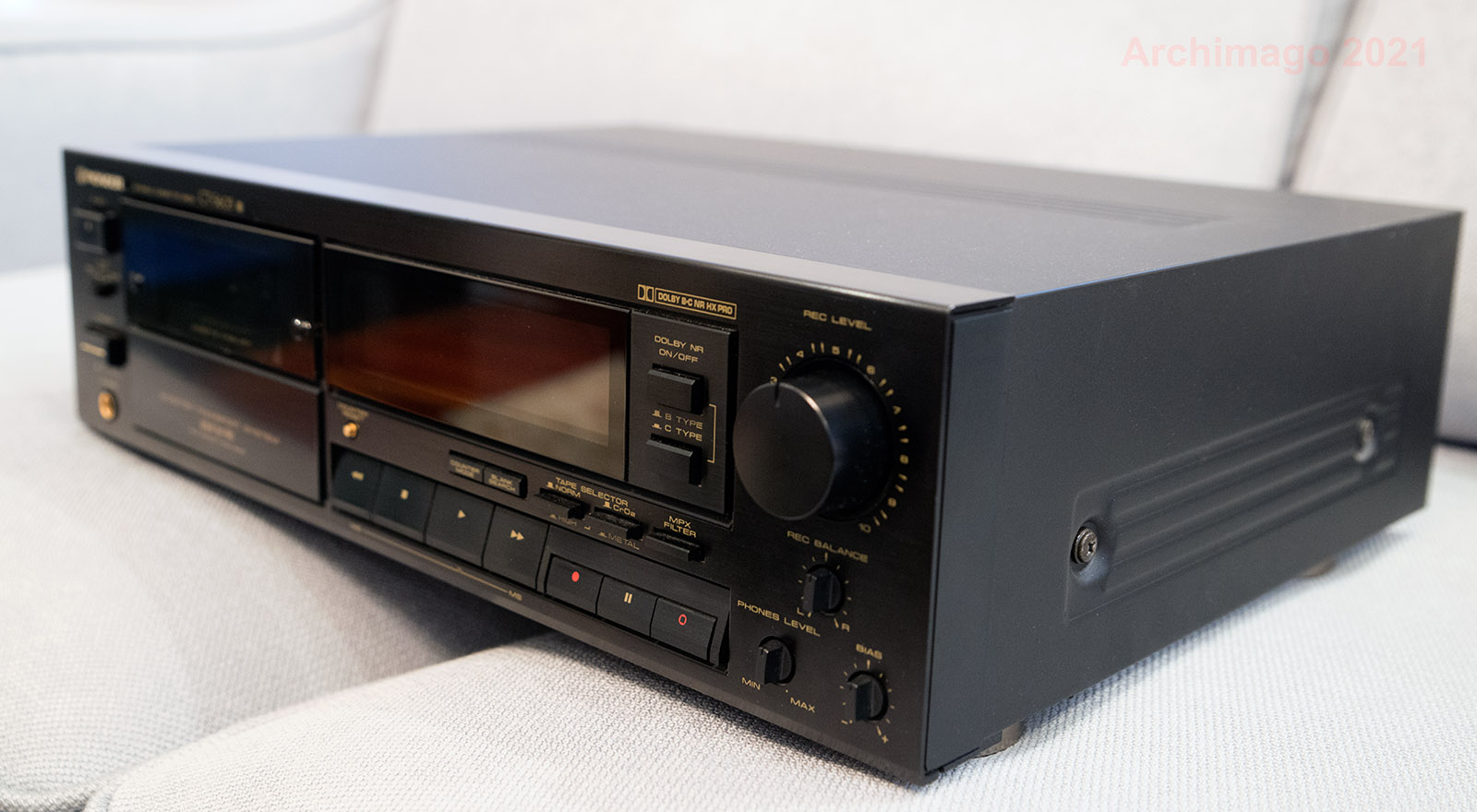
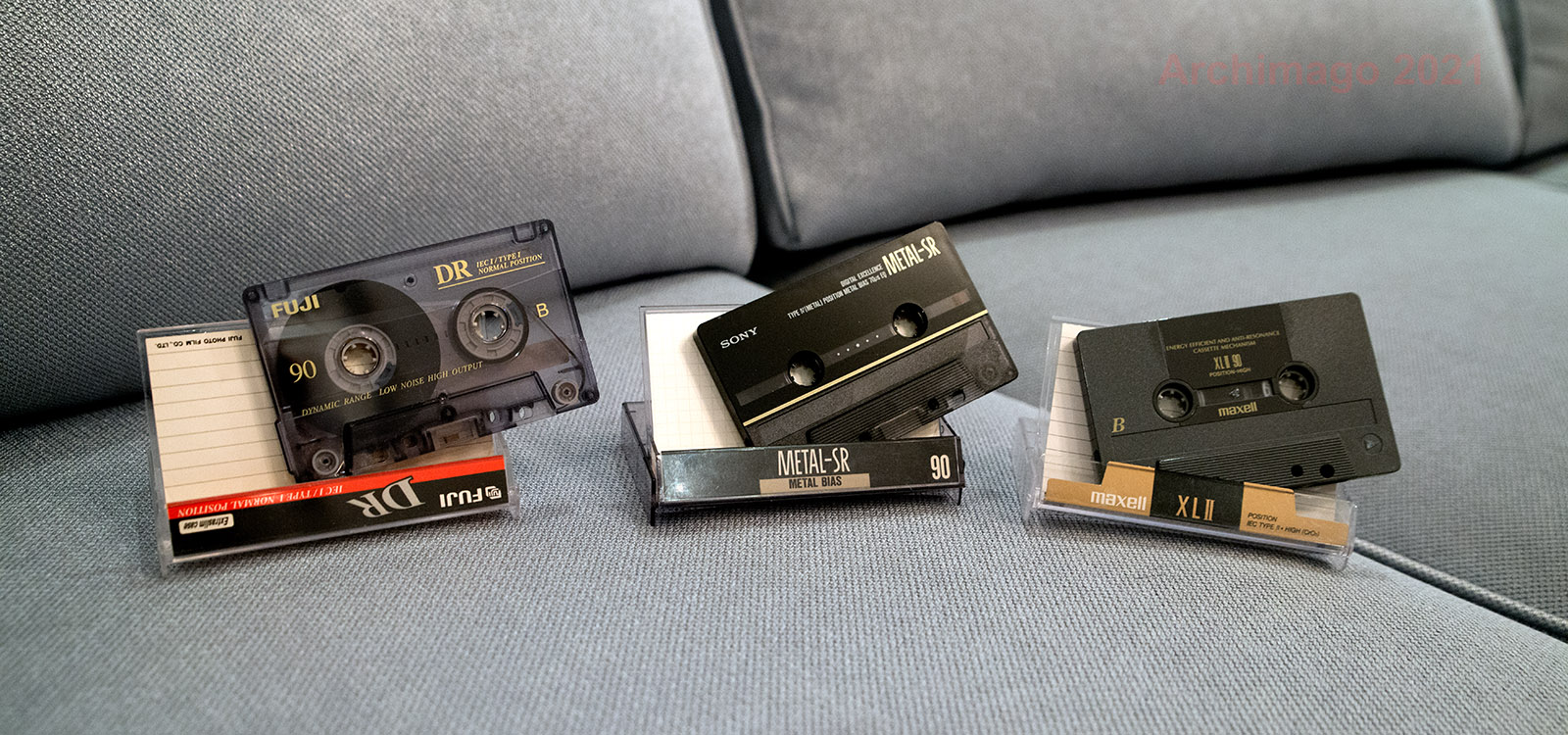
Within this collection were some made in the mid-'80s until about the mid-'90s when affordable CD burners (~$500 I think around 1996) came on the market and I quickly shifted to making "mix-CDs" rather than mix tapes. In fact, I found some almost brand new tapes that I forgot I still had:
![]() |
| Left: Fuji DR-I standard Type I Fe2O3 "Normal Bias". Right: Maxell XL II Type II CrO2 "High Bias". Center: Sony Metal-SR basic level Type IV "Metal Bias" for "Digital Excellence" - back in the day :-). |