Wednesday, 20 September 2023

RIP MQA codec? (Yeah. On Lenbrook Group's acquisition of bankrupt MQA Ltd., and SCL6.)

Hey folks, it looks like the saga around MQA never ends, but I think they're just scraping the bottom of the barrel with one last crank of the hype machine with hopes that this is somehow face-saving as well. :-|

So as of yesterday (September 19, 2023) it appears that Canadian brand Lenbrook Group of Companies - NAD, PSB, Bluesound - has acquired the intellectual property for MQA. Let's talk about this.

Saturday, 16 September 2023

As We Hear It: On requesting artists/albums to streaming services. (Plus adding more RAM and larger SSD to the computer workstation.)

Hey everyone, life's been very busy so not much time to think or work on audio stuff.

A few weeks back in my discussion of Qobuz in Canada, I said: "I'm curious, has anyone out there contacted their streaming service to request the addition of an artist or album? Were you able to get your requests included?"

Well, I received a number of responses, mostly from folks who were happy that Qobuz or TIDAL were able to oblige with putting their requests up. Here's a very well written one that I thought would be good to share with everyone... It brings up important points especially these days as we transition into more music lovers depending on the services to supply our music. Many, including myself these days are collecting more playlists than actual physical albums or spending the time to download anymore.

Saturday, 2 September 2023

MUSINGS: nVidia's GeForce RTX 4090. Power Limited Overclock settings. On technological progress into cognitive domains.

For this post, I thought I'd explore technological progress in the computing space. While I speak mainly about audio topics in these pages, I hope this post gives you an idea of the broader technological progress happening around us.

As per the image above, I've updated my workstation graphics card to a Gigabyte GeForce RTX 4090 Gaming OC. This card is truly a beast, covering 3.5 slots in the computer thanks to the extra vapor cooling chamber. [Related to this card is the slimmer Gigabyte GeForce RTX 4090 WindForce V2 that "just" takes up 3 slots.]

Years ago in 2017, I spoke about my GTX 1080 used in the game machine of that time. Since then, it's obvious that technology has moved forward very substantially! Every couple years has seen a new generation of graphics cards churned out by nVidia typically with AMD following suit and these days Intel making headway with their more budget-friendly ARC line.

With each iteration, we're seeing objective improvements in computational ability and physical characteristics like the shrinkage of the transistor "process" from 16nm for the GTX 1080 down to the 5nm (near limits of silicon) in the RTX 4090 today. With the ability to fit more transistors into a smaller area (higher density), the number of parallel computational cores has increased from 2560 shading cores (also known as CUDA cores) in the GTX 1080 to 16384 units in the RTX 4090, a 6.4x increase in this one metric alone; not to mention the addition of new features like the Tensor cores (high speed, mixed precision, high-dimensional matrix multiplications) released in the RTX 20*0 generation, important in deep-learning tasks.

Saturday, 26 August 2023

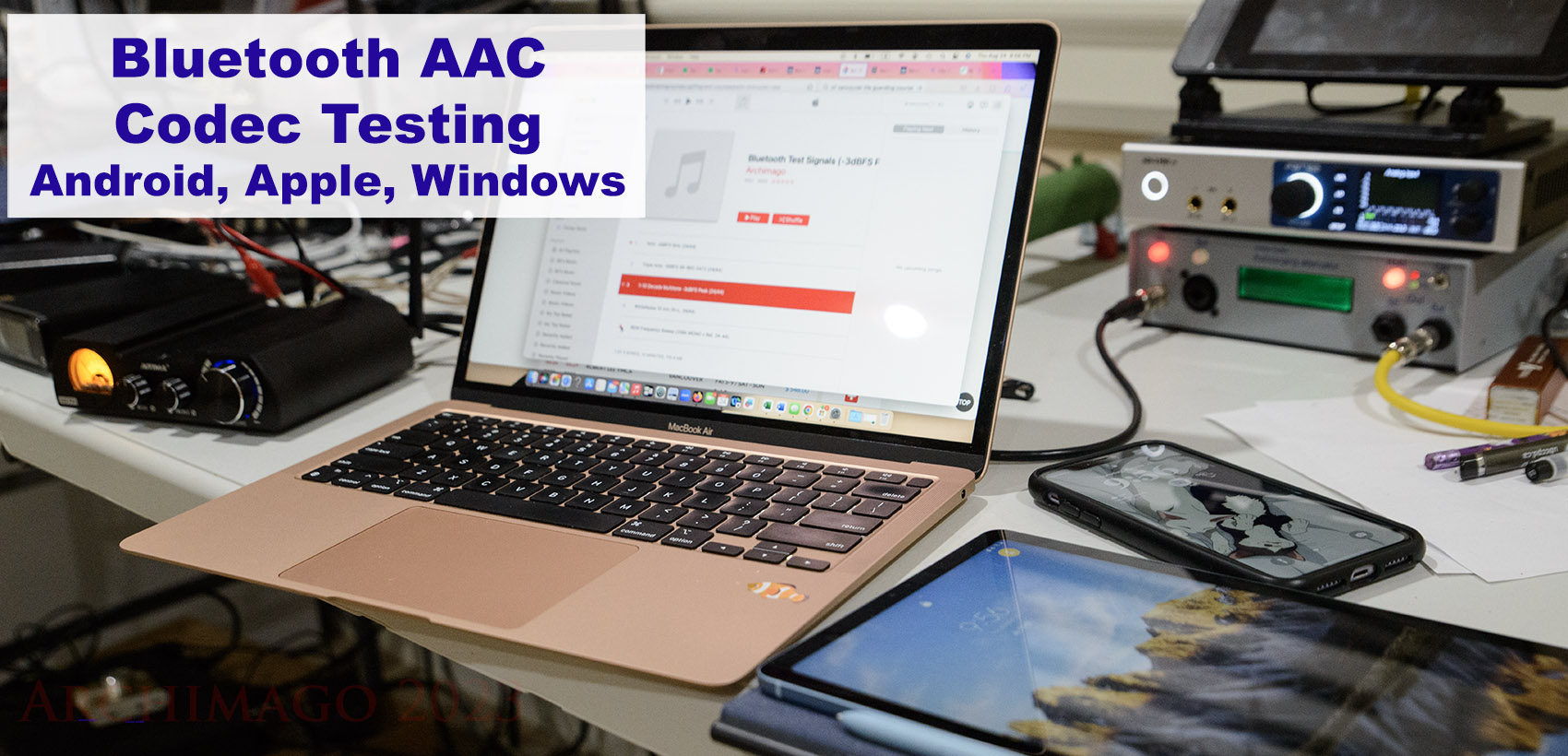
Part II: Comparison of Bluetooth Fidelity - AAC encoder quality (Android 10 & 13, Windows 11, Apple iPhones & Mac)

Greeting everyone, time to jump into Part II of our assessment of lossy Bluetooth music transmission.

In Part I, we examined the use of an Android 10 device (Huawei P30 Pro) as audio transmitter showing the differences between the codecs as played back with the AIYIMA A08 PRO amplifier and its Qualcomm QCC5125 Bluetooth SoC. Please refer to that article for details about the methodology and comparison with the output from a high resolution Topping desktop DAC.

For this Part II, let's focus on the Advanced Audio Coding (AAC) codec which has become a very popular option. Other than the universal default SBC, AAC is probably the most common one for music transmission on account of the fact that the "elephant in the room" - Apple - uses this across its product lines as their standard codec running at 256kbps. Given the amount of use, this is basically a practical standard for quality music transmission over Bluetooth.

Given the broad range of computers/tablets/phones used among family members here, when I'm looking for wireless headphones, I would want to make sure the device supports AAC; probably more so than aptX or LDAC.

Note that there is actually a "family" of AAC profiles from the early Low Complexity AAC (LC-AAC) originating in 1997 up to later versions like Extended High Efficiency AAC (xHE-AAC) released in 2012. As end users, we're generally not privy to such details so I'll just use the generic term "AAC" in this article.

Saturday, 19 August 2023

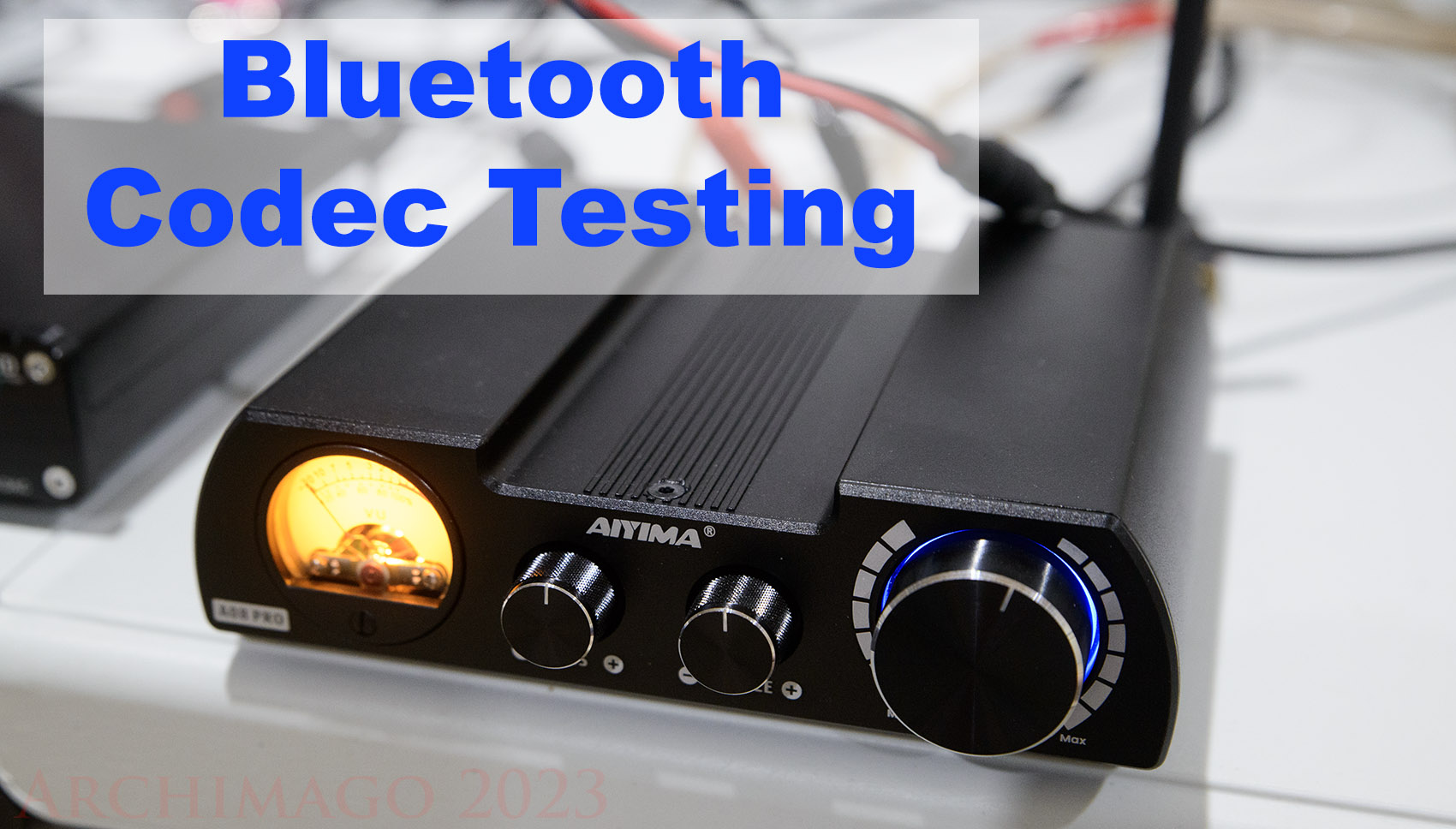
Part I: Comparison of Bluetooth Fidelity - SBC, aptX, AAC, LDAC (Android 10 source)

Blue ring around power/volume knob = Bluetooth input.

I've been wanting to do this for awhile. The last time I had a look at Bluetooth playback quality was way back in the days of the Oppo Sonica DAC in 2017.

Bluetooth has been our ubiquitous wireless audio transmission technology for more than 2 decades now; Bluetooth 1.0 was released in 1999 but it took a few years for the number of supported devices to grow and costs to come down. Since then, with subsequent versions, we have seen an increase in bandwidth, codecs, transmission range, and power efficiency.

Currently, we are at Bluetooth 5.X (version 5.0 standard released 2016) with the potential for up to 2Mbps transfer rate and distance maximally up to 240m (800ft)! These are clearly ideal numbers. Bluetooth transmits in the 2.4GHz bandwidth like WiFi but can "hop" (Frequency Hopping Spread Spectrum) between 79 channels, 1MHz wide, so there are usually no issues with coexistence. 

Given the 2Mbps limitation, lossless audio transmission would be a problem. Lossless 16/44.1 stereo is already just over 1.4Mbps uncompressed. Yes, we could losslessly compress but compression ratios are variable. Due to inevitable errors in transmission plus protocol overhead, in practice, at most we should think of Bluetooth 5 as operating around 1Mbps reliably under reasonable, if not close to ideal, conditions with transmitter/receiver nearby.

Saturday, 12 August 2023

The Different Types of Subjectivisms in Audiophilia (And How to Get Rid of Them) - guest Taylor Christensen

By Taylor Christensen

I joined the audiophile hobby less than 10 years ago, and, as a person who relies heavily on understanding and applying scientific literature in my day job, I was baffled (pun intended) to discover the extent to which the culture of this hobby is shaped by “pseudosciency” beliefs and even frank scientific ignorance, especially when considering the high prevalence of the audiophile community being well educated and affluent.

Since then, I have thought a lot about this phenomenon. Whenever I am trying to make sense of the world, I find that exhaustive, mutually exclusive categorizations help a great deal, and I have come up with such a categorization that helps me organize and understand the strange things we see in this culture.

To communicate clearly, I need to explicitly define any words whose definitions may be ambiguous – in this case especially, because they sound very similar. Therefore, let me start with three definitions.

The first one, which I will be using frequently throughout this article, is "subjectivism," which I am defining as "any false belief in audibility".

Contrast that with the second word I want to define: "subjectivity," which relates to a person having a personal preference.

Tuesday, 1 August 2023

REVIEW / MEASUREMENTS: AIYIMA A08 PRO - TI TPA3255 Class D amp with AAC/LDAC/AptX Bluetooth input. On "giant killers" and "CHEAP" amps. Goodbye TIDAL MQA.

Over the last while it has been interesting checking out some TI TPA3255 "PurePath" chip Class D audio amplifiers such as the Fosi Audio TB10D [Upgraded] and AOSHIDA A7.

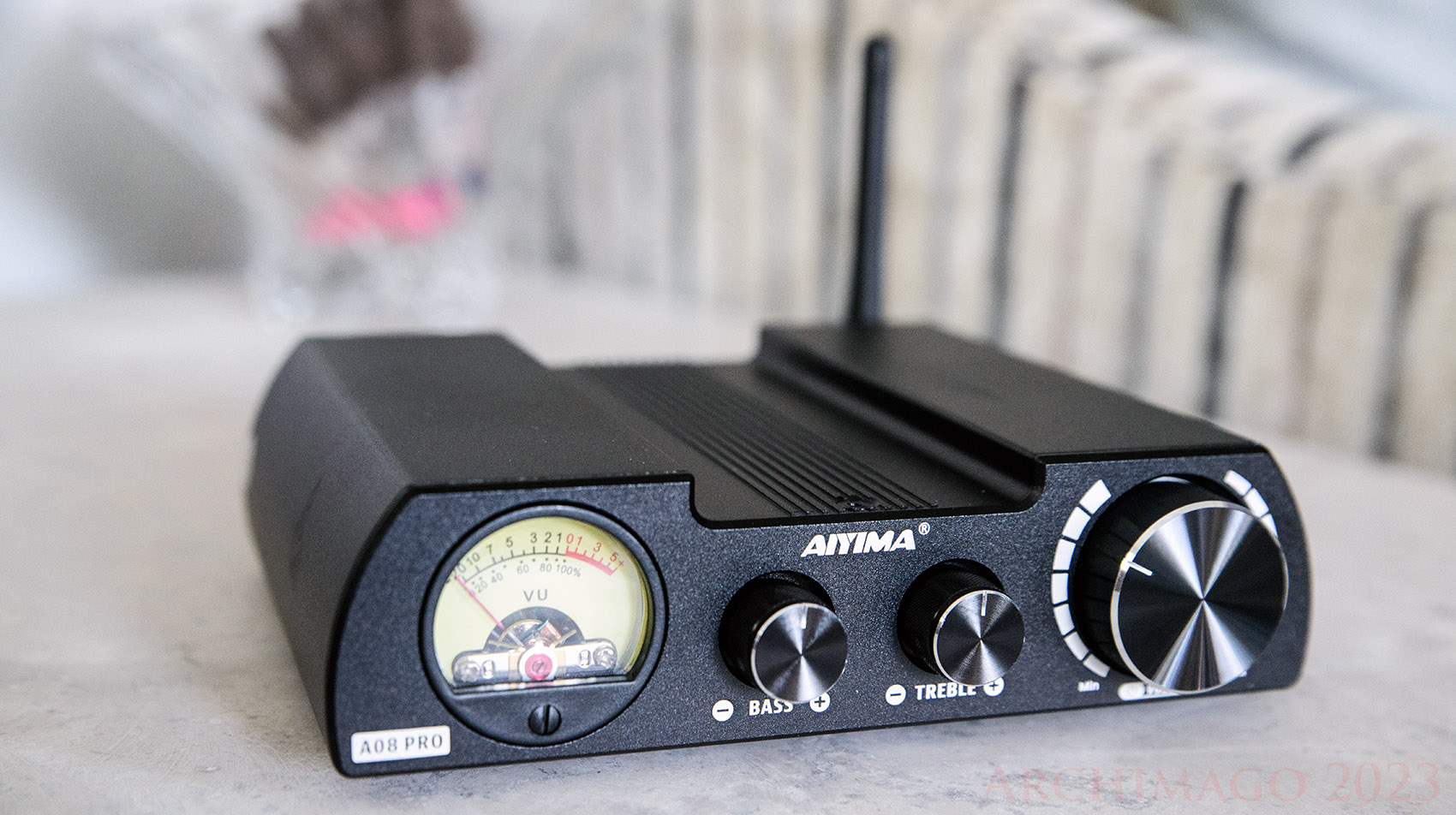
As you can see in the image above, I've got another one to put on the test bench for a look and listen - the AIYIMA A08 PRO (currently <US$130). Depending who you read/listen/watch, you'll see supporters who like the amp, sometimes calling it a "giant killer" of sorts, such as this blog post, or there are detractors like Andrew Robinson who seem to think these kinds of amps are only good in the nearfield and below 60dB SPL (see from 10:30). We'll talk about this below. :-)

As usual, let's start with a peek at what you get for a low price...

Saturday, 22 July 2023

Qobuz now in Canada. Finally, Roon integration and a taste of lossless multichannel streaming. Thoughts on the future of audio streaming.

Finally after all these years. Despite bugging them at least since RMAF2019, it has taken ages but at last as of April 2023, Qobuz is now available here in Canada. As you can see, price in Canadian dollars is reasonable at CDN$10.83/month yearly subscription or $13/month if you prefer month-to-month. I see a 60-day trial here; there are 3-month trials out there as well so look around for one that might apply to you.

With competition these days, the price is in line with other services offering up to 24/192 lossless hi-res content; here are the current prices in Canada:

Amazon Music HD - CDN$10.99/m ($8.99/m Prime members)
Apple Music Individual - CDN$10.99/m
Spotify Premium Individual (lossy Ogg Vorbis) - CDN$9.99/m
TIDAL HiFi (16/44.1) - CDN$9.99/m
TIDAL HiFi Plus (MQA, likely FLAC hi-res transition in August) - CDN$19.99/m.

Saturday, 15 July 2023

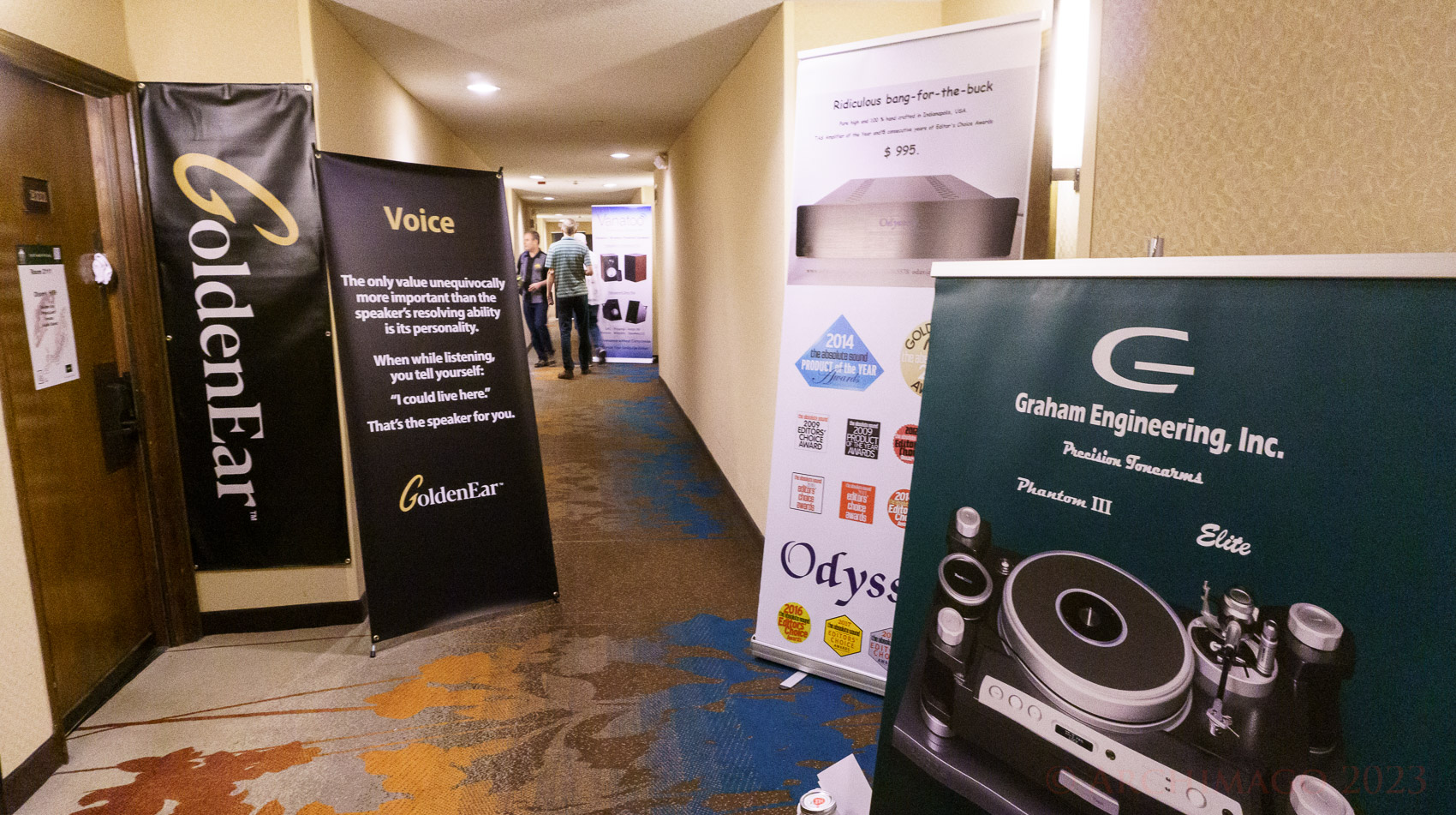
Pacific Audio Fest 2023: Part III - Final show musings... On sponsorships, seminars, unique listening opportunities (DSD256 vinyl sounds great ;-), and suggestions.

Collected promo materials, PAF2023.

Having published on the products seen at PAF2023 in Parts I and II, I thought it would be interesting to take some time to chat about other experiences from this show and parting observations.

These observations might apply at other audiophile shows as well.

Saturday, 8 July 2023

Pacific Audio Fest 2023: Part II - Hotel wing audio rooms. A few words on sound quality, and emotional connectedness.


Let's continue exploring Pacific Audio Fest 2023 beyond the main ballroom and larger rooms from last time. As you're probably aware, audio shows take place in hotels with companies renting out rooms to show off their gear. At PAF2023, we have 4 hotel "wings" to explore located on the first, second, and thirteenth floors.

Mercifully, PAF2023 isn't a big show which allowed me to enter each room and have a listen over the leisurely 3 days (Friday to Sunday) that I was in Seattle. Let's go for a stroll and see what each room had to offer. While I don't think I missed any of the rooms, I'll only highlight the ones that seemed most interesting...

Saturday, 1 July 2023

Pacific Audio Fest 2023: Part I - Ballrooms, marketplaces, and the larger rooms... Thoughts on vinyl / LP at "hi-fi" demos.


At the time of publication, it will have been a week since the Pacific Audio Fest 2023 (June 23-25). Compared to last year, they held it about a month earlier. As usual, I took a number of photos at the show and figured it would be fun to do some reporting on what was seen and heard, offering impressions from my notes and memories of the time in Seattle.

To start, let me remind everyone that while audio shows are fun, they are definitely not the best places to listen for sound quality. This is better done at a local dealer showroom you might be familiar with or best in the comfort of home. Typically at shows, we're treated with unfamiliar music. Even if the song is familiar, they might be playing from a streaming remaster or off an unfamiliar LP. Room acoustics vary widely, and attendees are typically shifting in and out, chatting during the visit while you're trying to appreciate the music.

Nonetheless, there is something to be said about the importance of that first impression for attendees of what we hear. In an age where much of our purchasing habits come from online sources and web-based transactions, being in the presence of these devices, and the impressions they leave us with, are powerful in directing whether we're likely going to explore the brand or specific device. As such, if companies are going to attend audio shows, it is very important that they do it right.

Saturday, 24 June 2023

REVIEW: Hidizs AP80 PRO-X Music Player - touchscreen, unbalanced and balanced headphone output, dual ESS ES9219C DAC. (And time for PAF 2023.)


Digital Audio Players (DAP) are not a class of components I've explored as thoroughly over here at the Musings. However, over the last few years, as smart phones have ditched their analogue headphone outputs opting for Bluetooth audio or (often cumbersome) DAC/headphone amp dongles, what's an audiophile to do when we want to listen to high-quality playback on the go? Perhaps a small DAP can satisfy this need.

Recently, the folks at Hidizs sent me one of their most recent Hidizs AP80 PRO-X (currently around US$200) for an honest review including objective testing of course. This is the 3rd evolution of the Hidizs DAP product line which started with the AP80 in 2018, followed by the AP80 Pro in 2020, and this newest AP80 PRO-X in 2022. As you can see with that picture of the device in my hand, it's a cute, flat, squarish music player measuring only 6.1x5.6x1.4cm, and weighs a mere 70g.

The aluminum and glass body, bright Samsung 480x360 2.45" touchscreen with good viewing angle, contrast and saturated colors, feels sturdy in the hand with convenient volume control knob, and 3 smaller physical buttons on the side.

Saturday, 17 June 2023

Computer hardware thingies: Mediasonic Probox USB3.2 Gen 2 10Gbps enclosure, SODOLA 8-port 2.5GbE Switch, and if you need a good USB-C cable for DAC...

Hey there everyone, this week I thought I'd just put up some quicky comments/"reviews" of products I've found useful in the last while in my computer system and home network in case this might be of use to you. Nothing too fancy or necessarily even audiophile related for the most part.

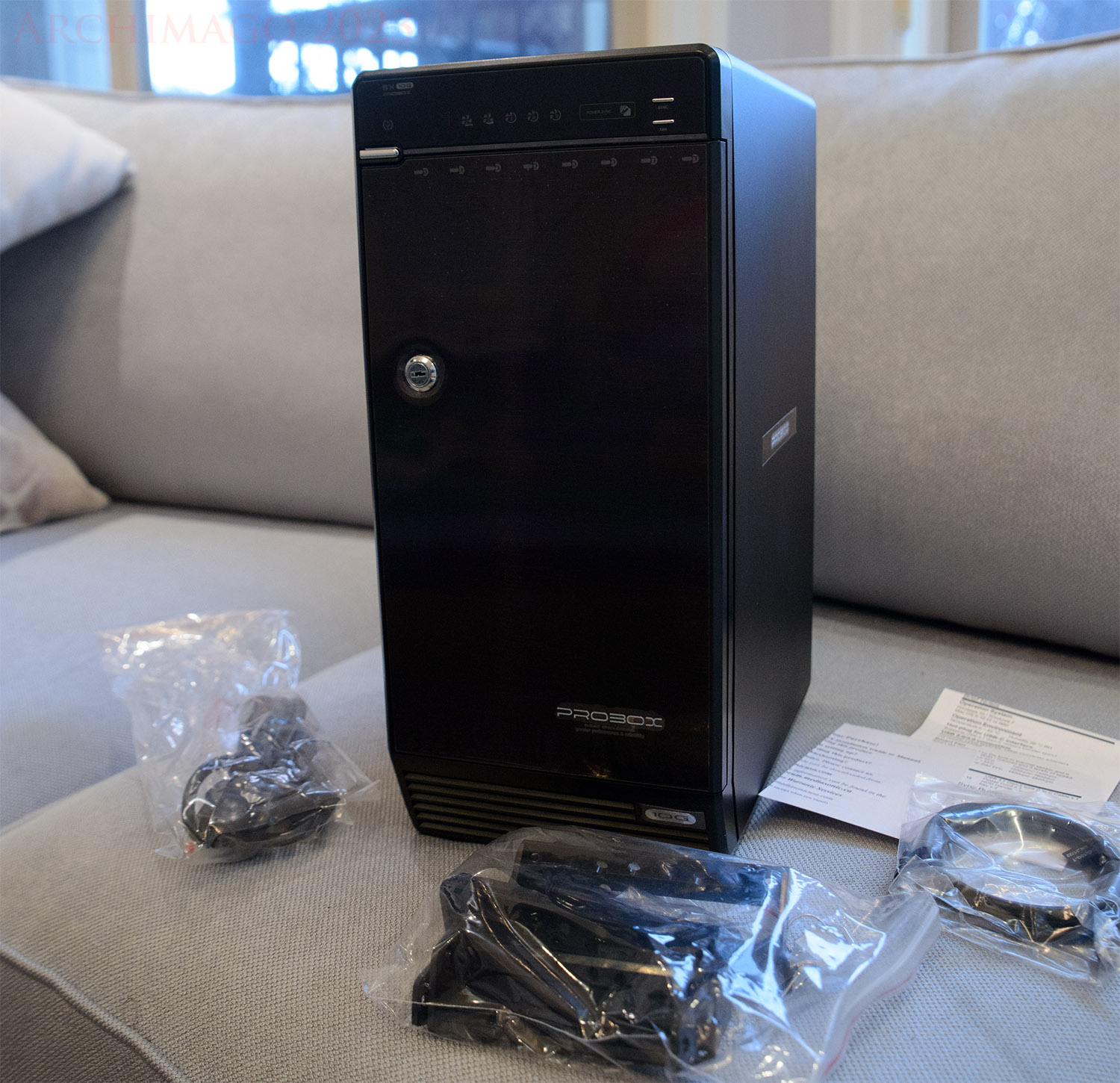
First, there's this Mediasonic Probox 8-Drive USB3.2 Gen 2 10Gbps enclosure [H82-SU31C] (US$350). 

Box contents: IEC power cable, 8x plastic HDD handles and screws, 3' USB-C to USB-C cable.

In 2023, while we're getting there with high capacity "3D" and higher endurance SSD designs, we're not quite at par with the storage capacity afforded by multi-terabyte hard drives available at excellent prices. I'm sure most of us have been gathering our archive of digital memories and other media for years and have a need for all those terabytes at least backed up.

I've been using the older USB 3.0 + eSATA version (H82-SU3S2) of this device for >10 years already as a simple 3.5" HDD backup box which unfortunately went a bit flaky on me with occasional loss of connection in the last few months. Hence the upgrade to this newer model.

As per the description, this is a 10Gbps USB 3.2 Gen 2 device, the interface is USB-C; nothing else other than the power connector on the back and a few buttons and indicators up front. 

Saturday, 10 June 2023

Beelink EQ12: Low power Intel N100-based Roon endpoint and Kodi 4K/HDR/60fps player, general Windows 11 computer. A few words on HDR10(+), Dolby Vision, AV1, and Kodi. And hilarious Transparent $$$ cables.

Beelink EQ12 MiniPC, some testing with the RME ADI-2 Pro FS R Black Edition.

Since around 2004, I've been using various computer systems for music playback, initially starting with ripped files on PCs and then quickly transitioning to server-endpoint "distributed" playback by something like 2006/2007 when I bought my first Slim Devices Squeezebox 3. I've never really looked back since, as this is IMO the superior way to manage music with a central home server repository and distributing the music around the home. It has been more than a decade since I've cared to use a CD transport other than to rip music and there's no reason why CDs would sound better anyways ("bit perfect" and all that).

Of course back in the day, especially prior to 2010, putting a computer in the sound room was likely going to be fraught with noise issues. In the 2nd decade of the 21st Century now, with much lower CPU/memory/motherboard power demands while capable of excellent speed, silent SSD drives, and small form factor MiniPCs, it's actually rather trivial these days to maintain cool and quiet, unobtrusive computers that perform well as AV "appliances". These machines will not contribute to acoustic or electrical noise pollution in listening rooms even with low ambient noise levels provided the hobbyist approaches device selection and optimization with some basic care.

Today, let's convert that little Beelink EQ12 Intel N100-based computer (discussed/reviewed last time) into something I would use as a Windows audio streamer and movie player in my media room. Let's talk about some BIOS settings, Windows set-up suggestions to consider, and computational potential.

Saturday, 27 May 2023

REVIEW: Beelink EQ12 Mini Computer - Intel N100 CPU (12th Gen, 4C/4T, 24EU iGPU), 8GB DDR5, 500GB NVMe. And on journalistic objectivity, truthfulness and non-neutrality.

For more than a year now, since the MeLE Quieter2Q, I've transitioned media playback away from the Raspberry Pi system in my main sound room as I've explored options in the MiniPC world. This is the result of technological progress as x86/x64 processors have become significantly more energy-efficient, available in smaller packages, with increasing processing speed, access to the huge library of PC software, and capabilities including support for multichannel HDMI audio output and 4K video decoding.

Yes, we could easily build massive "He-Man" computers these days sucking hundreds of watts to power fast CPUs and modern discrete GPUs, even as "audiophile computers", I believe these are clearly inelegant solutions for AV playback or even as a media server.

Today, let's look at a new entry - the Beelink EQ12 (currently just around US$250-300 depending on deals, with 8GB of DDR5 RAM, 500GB NVMe storage as tested). This machine uses the latest 12th Generation 10nm "Alder Lake" quad-core Intel N100 low-power processor running at up to 3.4GHz turbo. With this new generation, Intel has moved away from names like "Celeron" and "Pentium". While the specs say TDP of 6W for the part, in real life the computer does suck up more power.

For audiophiles thinking of using HQPlayer, these new processors feature the AVX2 instruction set; opening the doors for using the new versions of that software under Windows again should you desire. For the record, this machine was purchased through the usual retail channels.

Let's have a look today at this hardware, and evaluate the speed compared to previous reviewed machines on this blog.