Saturday, 4 March 2023

Internet Blind Test: 24-Bit vs. Dithered 16-Bit Part Deux - Daft Punk Edition! And the honest desire to seek truth as audiophiles.

BTW: 1.5kHz sine waveform, -65dBFS. 16-bits on the left, 24-bits on the right.

It's amazing how time flies. Nine years ago - 2014 - at a time when hi-res audio downloads were being promoted as the "next best thing" for audiophiles, we ran a 24-bit vs. 16-bit blind listening test on this blog. I'll leave you to examine the results.

Since then, electronics like DACs have advanced quite significantly. Compared to 2014, these days, high quality asynchronous USB DACs have become ubiquitous. Jitter is basically a non-issue now. Inexpensive audio streamers like Raspberry Pi devices can be easily put together. We can all play music with wide selections of digital filters without great difficulty. Very high quality headphone amps and phenomenal headphones have become commonplace with a growing "head-fi" community.

Recently, I had some fun on this Steve Hoffman Forums thread engaging in the discussion about 16-bit vs. 24-bit; the topic of audibility again came up. As usual, things can get pretty contentious among audiophiles and since it has been awhile and perhaps some of you did not have the opportunity to participate in 2014, let's do a blind test again for those wanting to listen to 24-bit vs. 16-bit audio.

Let's use popular music rather than the more esoteric 24-bit 2L classical recordings last time - let's try some "classic" Daft Punk. ;-)

Friday, 24 February 2023

RETRO-MEASURE: Dynaco A-35 speakers (1972-1976). Technological maturity and audio. Comparison of the qSpin predicted room response vs. in-room measurement.

Audiophilia has a rich history filled with many products and ideas over the decades. Many of the "vintage" products can still be found these days on the used market and many carry with them an interesting story or might have developed "cult followings". I find it interesting examining these older "retro" products to help provide context when we think about the sound quality we have these days.

Some companies like the one we're looking at today - Dynaco - founded by David Hafler and Ed Laurent back in the mid-50's are well known. The company's products were popular through the '60-'70s including a foray into quad-channels. The company eventually got acquired and the brand decommissioned by 1980.

Dynaco was known for their amplifiers and "Dynakit"s they sold in the emerging hi-fi market back in the day to audio enthusiasts. Along the way, by 1969, they got into the speaker market with their "A-Series" line of products including the very popular A-25 (>1M sold worldwide according to Ed Laurent) and the speaker we'll be examining today - the less popular, larger Dynaco A-35 sibling.

Thanks again to linnrd for digging up this pair of old speakers for me to examine from his gear archive. It looks like these have been very well taken care of over almost half a Century. Well, at least there's no need to "break in" these speakers. ;-)

Saturday, 11 February 2023

SURVEY: What audio playback system and/or streaming music service are you using in 2023?

Hey there gals and guys. I've been busy over the last while getting some things at work going, so this means it's time for a survey to hear from you ;-).

It's always good to know what audio lovers are doing out there and this could of course help me look at interesting topics to examine in the future. The last time I did this was back in 2019, looking at adoption of streaming services and lossy vs. lossless among the readership - much has changed since then!

I've seen various hobbyist poll results over the last while. A common question being asked these days is "Which digital streaming service is most popular?". This certainly makes sense given the growth of Internet streaming over the years, but much too simplistic! As an audiophile blogger, my interest isn't so much about which commercial service is "winning" since it really doesn't matter too much to most of us I think, and will fluctuate depending on where one lives and what services are available. Instead, audio enthusiasts these days have access to all kinds of ways to listen to music and choices to make including whether we like "spatial audio" as a recent feature.

In Archimago's Musings style ;-), let's go deeper and get a detailed survey going, collecting anonymous data on who you are, what you use mostly, and what kind of systems you enjoy in 2023 - not just what music service...

Sunday, 5 February 2023

MEASUREMENTS: Intona 7055-C USB 3.0 SuperSpeed Isolator. And Darko & Lavorgna hear no difference with the Silent Angel ethernet switch. [Importance of open discussions.]

Over the last couple years, I've shown in my PC measurement system the benefit of using USB isolation to break ground loops when test devices are connected to the ADC. There was the ADuM4160 device which was limited to "Full Speed" (12Mbps). Then I posted on the Topping HS01 which operates at a fixed USB 2.0 "High Speed" (480Mbps).

Over the Christmas holidays, I got a hold of the Intona 7055-C USB Isolator which can run at USB 3.0 "SuperSpeed" (5Gbps), basically a pass-through device which provides galvanic isolation of the USB signal and ground lines, with the flexibility of being downward-compatible with 480Mbps (most important for USB audio), 12Mbps, and even Low Speed 1.5Mbps devices.

Although audiophiles have been talking about isolators like this for years used in home set-ups, they're really meant for industrial applications where devices with USB ports might be subjected to high-voltage surges and spikes. This "C" model is designed for protection up to a modest 1kV over 60 seconds. The more expensive 7055-D can handle up to 5kVrms over 60 seconds.

Friday, 27 January 2023

MUSINGS: On Michael Fremer's "How Best to Hear Patricia Barber's 'Clique!'" - selective hearing and more MQA nonsense. [Extended Edition!]

A little bit of dramatics for effect. ;-)

Like many audiophiles, I've been well aware of Patricia Barber's recordings over the years. Her discography of "reference"-sounding quality albums have already had decades of influence among hi-fi enthusiasts with increased exposure beginning in the 1990's (her first album was Split in 1989). Personally, I was introduced to her music with Café Blue released in 1994.

I think Barber is an interesting contrast to the other well-known female jazz vocalist we all know well - Diana Krall. Barber's material tends to be more original (less of the standards), more edgy, compared to Krall's accessibility and mainstream appeal.

Already, on this blog, I've mentioned the most recent album Clique! (2021, DR14 hi-res, DR13 MQA-CD) but we're not going to be mainly talking about the music on the album in this post. Rather, I want to explore the opinions and beliefs of Michael Fremer in his article "How Best to Hear Patricia Barber's Clique!" recently posted on Tracking Angle.

Saturday, 21 January 2023

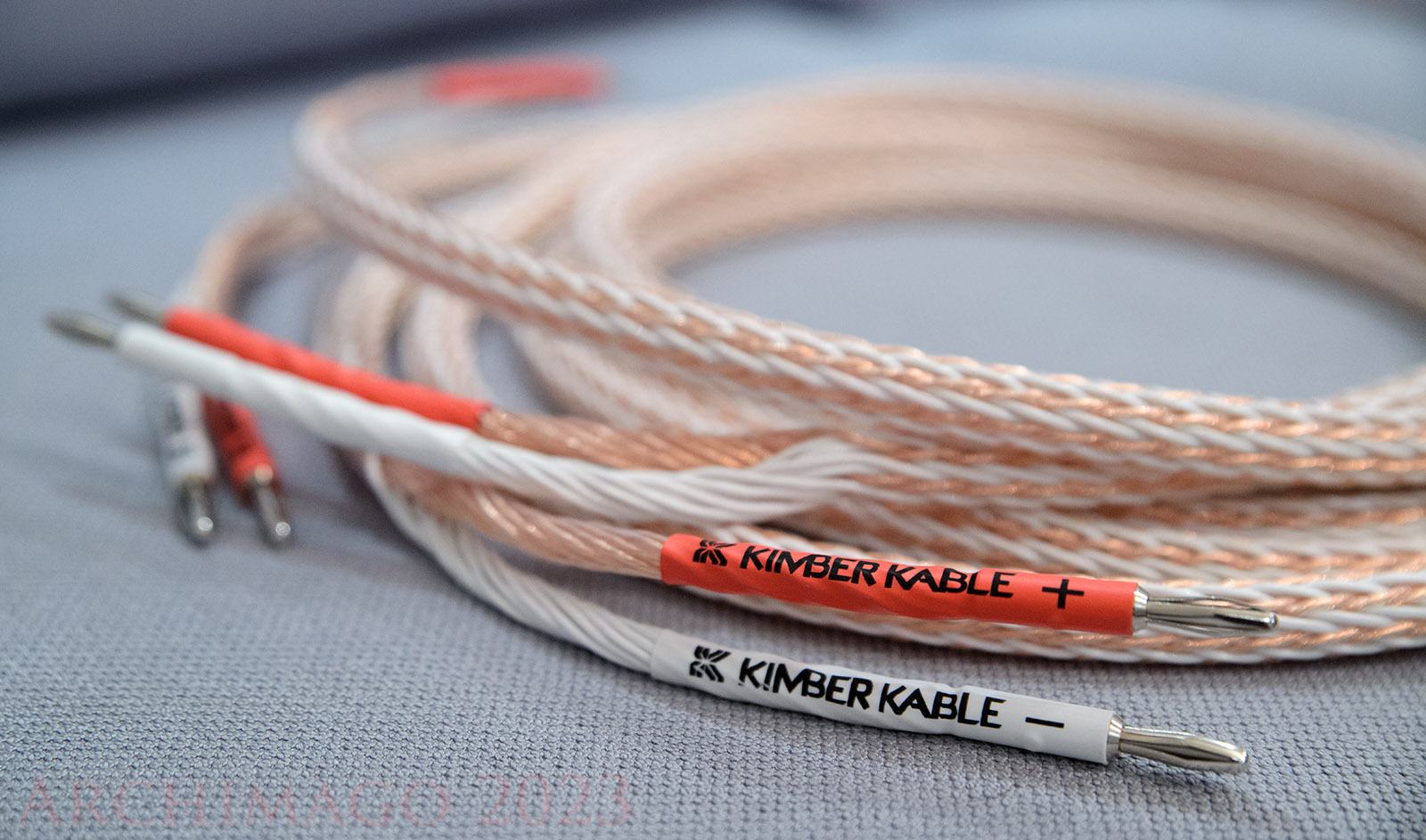
MEASUREMENTS: Knockoff "Kimber Kable" 12TC Speaker Cables. And do cable risers / lifters / elevators make a difference?


As I'm sure we're all aware, in the world of luxury goods, there will be fakes out there. Wandering the streets of basically any city these days, we'll run into all kinds of cheap "Gucci" and "Hermès" bags, fake "Rolex" and "Omega" watches, knock-off "Nike" sneakers, and counterfeit "Ray-Ban" sunglasses.

So too in the world of the audiophile. It's not hard these days to browse through "used" eBay listings or explore the copious products on Alibaba/AliExpress to find fake "High End Audio" products.

As you probably know, I'm not one to be impressed by most cable claims and believe that there's little value in a lot of what's being sold (collected articles here). Given the high prices for lengths of wire, is it any wonder then that some might want to capitalize on brand names to entice buyers?

A friend who knows I'm into audio stuff, "for fun", decided to get me the cables in the picture above from Singapore recently while on a business trip. The cables are more than likely made in China. As you can see, these are labeled as "Kimber Kable", with the same geometry and supposed build of 12TC speaker cables. He purchased them for <US$75 as a pair of 2.5m lengths.

[Back in 2015, I examined and had a listen to genuine Kimber 8TC.]

Saturday, 14 January 2023

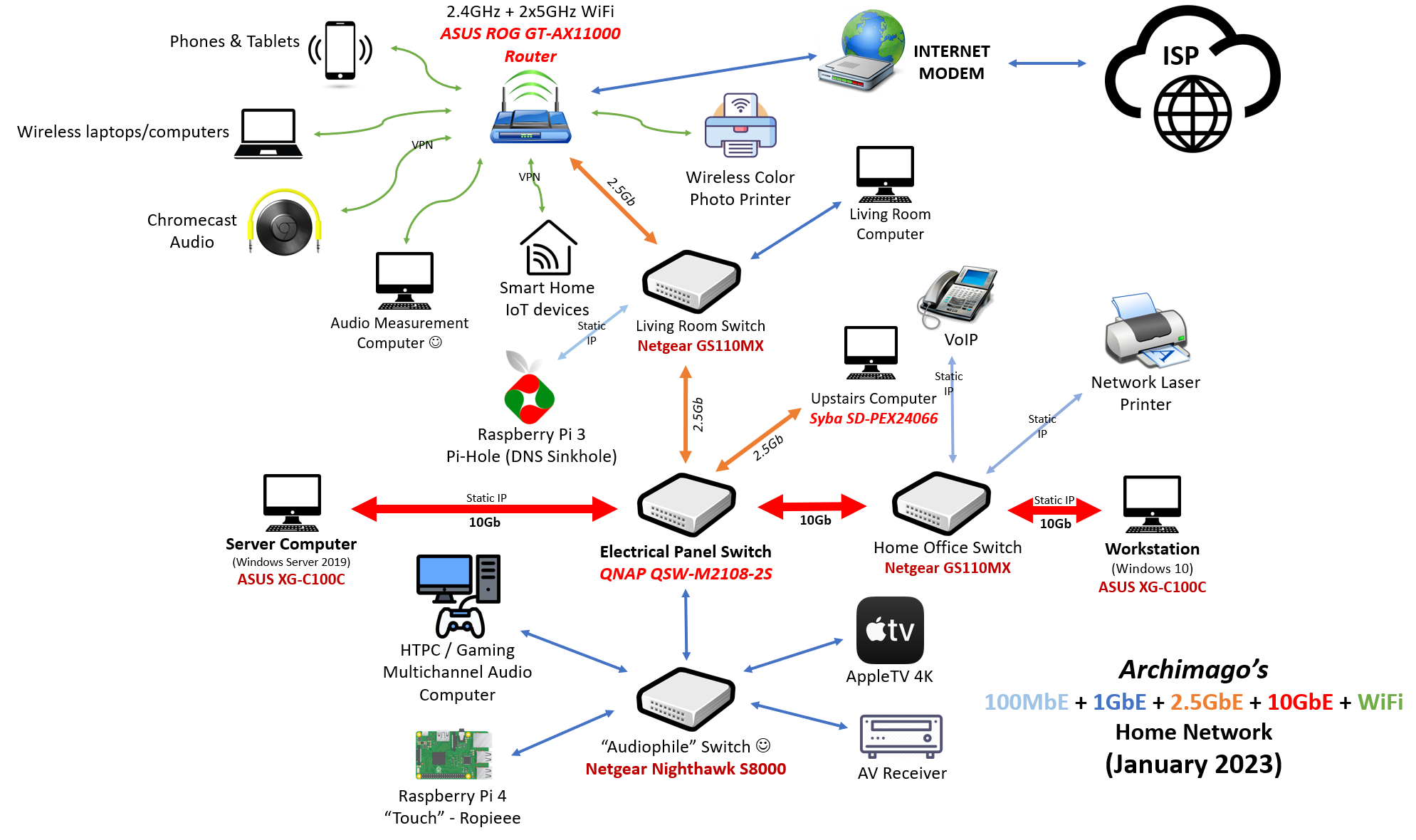
Home Network: Update on mixed 10 gigabit network, Roon stability & value? (And a quick look at Pi-Hole.)

Happy 2023, dear audiophiles!

While I typically publish articles like measurements of audio hardware, discuss albums (usually as part of reviews or examination of things like dynamic range), and offer critiques about extreme "High End" audiophilia, every once awhile I'll talk more generally about my computer hardware and local area network (LAN). I see the network stuff as part of a broader foundation of the modern digital audio system which simply has to work reliably and efficiently for digital streaming/computer audiophiles. Like other parts of the "perfectionist" audiophile system (like say the room which is often also neglected in audiophile hardware talk), this should be optimized for best performance such that those using it will not have to suffer from speed issues or dropouts. Sometimes it's easier said than done given potential interoperability nuances of the multitudes of network hardware!

Apart from silly "audiophile ethernet switches", or "audiophile ethernet cables", there's generally nothing specific to sell to audiophiles when it comes to home network hardware. As a result, it's atypical to see long articles at audiophile websites or in the magazines about this stuff despite the importance.

As a reminder, in my experience, unless we're dealing with faulty gear, "Bits Are Bits" when it comes to sound quality - that's just reality if you take the time to analyze the audio signal objectively or run some controlled listening trials. Despite all kinds of subjective voices/claims out there otherwise, high performance modern computer networks are simply not going to change the sound of audio playback so long as they're reliably "bit-perfect". After all these years, I find no reason to be concerned about ethernet cables, or switches transferring packet data around. Whether the data is of audio content or otherwise is irrelevant - the network doesn't care whether it's audio meant for the DAC or pixels aimed at the printer.

Digital data, given how it's packaged and transmitted, when corrupted will result in rather obvious audible anomalies if not corrected (like an error-prone USB cable). You will not hear subtle changes (like "more bass" or "better soundstage" or even more vaguely "improved presence") as some reviewers seem to promote when hyping nonsensical claims of what they supposedly "heard".

Tuesday, 20 December 2022

As We Hear It: Yet Another Christmas Playlist (2022) - Guest post by Allan Folz


Greetings and Merry Christmas Archimago and readers. For new readers, the Christmas playlist is a recent tradition (2020, 2021) at Archimago Musings that had as its genesis recognition that great dynamic range makes for great music, even if you didn't necessarily know it or weren't even looking for it.

It started way back in the 90's. I accumulated a small collection of Christmas CD's which sounded great. My wife and I never tired of listening to them between Thanksgiving and Christmas every year. Several years later I happened across this humble blog and learned about dynamic range, among a great many other things. When I started measuring some of the albums in my CD collection I noticed that all my favorites had pretty high dynamic ranges. Additionally, the albums I bought, only to be disappointed in them after I got them home and had a few listens had pretty low dynamic ranges. One year as Christmas approached I thought I'd test the theory against my Christmas albums. To my pleasant non-surprise I saw that they all scored respectably well on dynamic range. A couple years later it occurred to me to share my epiphany (heh) with Arch and the blog in a guest post. It was well received, so the next year I did another playlist, again with nod to dynamic range.

This year, I am going to break slightly with tradition and won't be overtly covering dynamic range. I trust that's been proven to everyone's satisfaction. Plus, these are albums I discovered from streaming services, and I don't actually know the dynamic ranges. Not to mention, streaming services today often fudge around with albums' loudness since the number one complaint from streaming listeners is loud songs coming after relatively quiet ones when they are listening to mix playlists. The dynamic range of the song you stream is often probably not the same as on the CD you would buy. [Ed: Indeed. Much depends on which mastering is on the streaming service!]

Saturday, 17 December 2022

MUSINGS: On audio gear appearance and design. (A case of the HiFi Rose RA180 and Audio Jewelry.)


As work calms down into the holiday season, I thought it would be fun today to talk about what's obviously a subjective matter... Appearance.

Clearly, aesthetics are matters to be adjudicated "in the eye of the beholder". Although in these pages, I'm more curious about sound quality and using objective means to test and demonstrate the resolution of devices, appearances certainly do matter even if for me that's not the highest priority. Of course a good looking sound system is pleasing to the eye, improves the ambiance of one's room, might impress other audio friends, and there's always that "wife/spouse/partner acceptance factor" (let's just call this the traditional WAF). For marital harmony, it is only fair to receive feedback about one's system occupying a shared space. Whenever possible, I would highly recommend a dedicated room as the only way to go if you're desiring to be a hardcore, freedom-loving audiophile beyond "head-fi". ;-)

Sunday, 11 December 2022

REVIEW: E1DA #9038D6K Dongle DAC / Headphone Amp (Part II): Headphone Amp Power, DSD, Subjective Impressions, AMPT & Perfectionistic Tweaking!

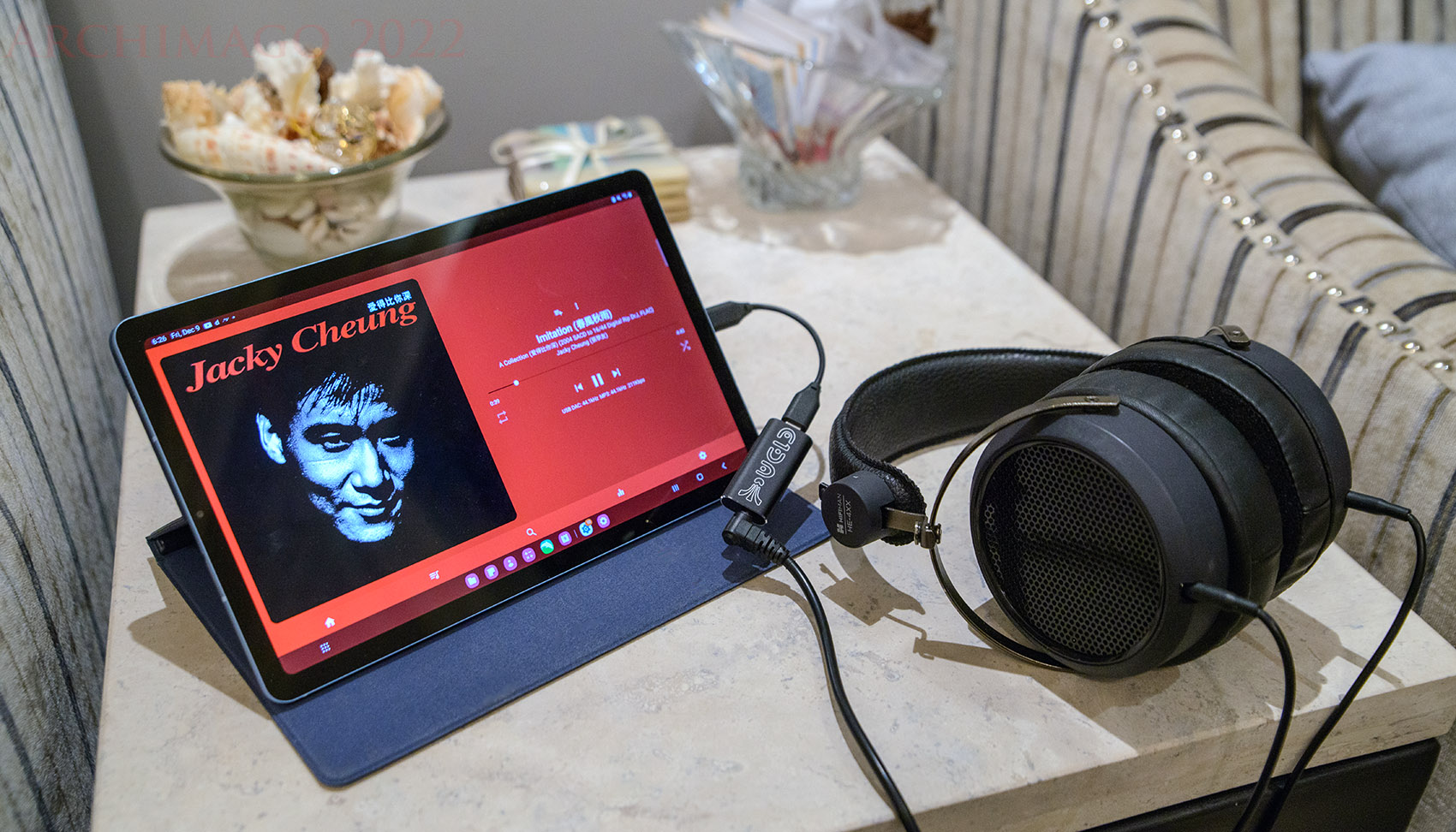
A great sounding music listening station! (Samsung Galaxy Tablet, Drop+HiFiMan HE-4XX, classic Jacky Cheung cantopop.)

Okay friends, today we continue with Part II of the discussion on E1DA's #9038D6K portable DAC/headphone amp. Please refer to Part I last time for the general overview of DAC performance which already tells us about the PCM resolution of the device. The data from last time shows that for the price and size, this unassuming dongle is one heck of an accurate, high-fidelity, high-resolution digital-analogue converter.

This time, let's move forward with exploring other areas not yet discussed. Specifically, let's focus on resolution when under headphone-like loads, look at DSD performance characteristics, have a listen to the DAC, and given that E1DA is known to be tweaker/DIY-friendly (including making devices like the Cosmos line), let's also talk about what I would consider more "extreme" tweaking for the perfectionist audiophiles!

Tuesday, 6 December 2022

REVIEW: E1DA #9038D6K Dongle DAC / Headphone Amp (Part I) - PCM DAC performance. And (potentially) higher dynamic range in Spatial Audio 2-channel fold-downs.

Little E1DA DAC to Sennheiser HD800 headphones via 1/4" adaptor... Looks ridiculous if walking around in public with this! But sounds great. ;-)

A few weeks back, I received a package from Ivan Khlyupin (IVX) of E1DA containing both the Cosmos Scaler and the device we'll be looking at today - the E1DA #9038D6K DAC / headphone amplifier.

This is the latest iteration of the #9038D models which feature 3.5mm single-ended output, to be distinguished from the #9038S models which are balanced devices with 2.5mm output jacks. And the "6K" refers to 6000μF (!) of power rail filtering (original #9038D has 4000μF).

As the name implies, internally, these DACs are based on the ESS ES9038Q2M low-power chips. They are capable of playing back PCM to 32/384 as well as up to DSD256. Over the last year or two, we've seen a proliferation of DACs based on this component and I would say that overall, the performance on these devices have in general been very good. Thanks to the low power consumption, we can now have mobile converters that perform at least to the resolution of many desktop DACs while being fully USB-powered.

To generate the amplified headphone output, op-amps used include the OPA1622 and OPA1602 based on the E1DA specs. To achieve very high resolution, internal components are advertised to be quality Susumu resistors, Murata C0G caps, Kyocera AVX tantalum caps, and connectors from Taiwan. In my discussions with Ivan, I know in the last while it has been slow for him to source some of these components and at times difficult to avoid fake parts out there!

Saturday, 26 November 2022

"High End" Audiophile Science? On Milind N. Kunchur's hard-to-believe research articles.

It has been a busy week so let's keep this article somewhat shorter. ;-)

Beyond the typical audiophile magazines, websites, and videos, I think it's interesting once awhile to think about some of the research out there in the academic literature related to "audiophile" topics.

As I have said many times, I believe that typical 2-channel hi-fi audio is very much a "mature" science these days so on balance it's probably unlikely that understanding of core technologies should be too contentious. I know, some audiophiles and companies will protest this idea with the belief that human hearing somehow has much more potential and that we cannot measure all domains of auditory acuity as applied to our audio tech. As science-driven hobbyists, since we can perform blind tests and show that people have difficulty differentiating high bitrate MP3 from lossless, even relatively high distortions are difficult to hear, and hi-res audio is generally indistinguishable from 16/44.1 lossless (except for a few minor instances which can be statistically significant but practically not likely relevant for music listening), I think the onus of proof remains on those who make contentious or dramatic claims outside of the standard paradigm.

Saturday, 19 November 2022

EARLY LOOK: The E1DA Cosmos Scaler prototype. As usual, Neil Young (in "World Record" album interview) remains neurotic against digital...


Today, let's talk about something rather unique.

In the image above, we see the E1DA Cosmos Scaler in use as I was running measurements of some DACs I have around here. As I mentioned last time, this is a prototype product which although has been announced/discussed online, as far as I am aware, is not at the stage of imminent production or public release. As such, be mindful that details I describe here might change if this were to be released as a product.

The Scaler functions as a balanced 2-channel in/out pre-amp that can apply 16 discrete levels (this is not a regular volume knob for routine volume control) of very clean amplification (using OPA1612) from 0dB to +26.7dB along with an "auto-ranger" feature that aims at a target voltage level to feed the ADC. Along with this, the Scaler's stable high 200kΩ balanced (100kΩ unbalanced) input impedance resolves one of the limitations of the Cosmos ADC; the lower input impedance for example 1.66kΩ at a commonly-used 4.5Vrms setting.

Thanks again to Ivan Khlyupin (IVX) for sending me the package to test out.

As with any pre-amp product, the question is how quietly does this device perform when feeding the output into a high-resolution measurement ADC in this case. And related to that, whether the device adds any of its own distortions.

Saturday, 12 November 2022

Accurate Sound's Hang Loose Convolver Multichannel on low power Mini PC. The disgraceful AQVOX ethernet switch. And some E1DA upcoming evaluations.


Over the last few weeks, I've been using the inexpensive Beelink Mini S Intel Celeron N5095A PC in my music system. Recently, I posted on using it in Linux as a streamer with HQPlayer upsampling and for multichannel Roon capabilities. As you can see in that post, for audio purposes, even this level of CPU performance on a modern entry-level machine is enough for what would be advanced PCM upsampling (ie. 1M-taps realtime PCM) and even IMO very good PCM-to-DSD256 performance. More evidence to remind us that there's generally no need to get excited about some of the more expensive "audiophile" computers and streaming machines which are often embedded low-power computers at heart.

Recently, my friend Mitch Barnett of AccurateSound.ca wondered if I could look into the performance of his latest version of Hang Loose Convolver (HLC) with this low-power computer using my power limited and quiet fan BIOS settings. HLC is an advanced standalone, VST3 plug-in, or AU (Mac) plug-in that provides the ability for audio lovers to load in various convolution filters, allows for easy level matching, and provides basically immediate switching (0.1ms) between these filters for accurate A/B listening comparisons. Let's take a look at this on the Beelink.

Saturday, 5 November 2022

The studio production: The Audiophile Society & Chesky's Mega Dimensional Sound; Revolver Remix. Is there an "absolute sound"?

Above, you see some recently added albums on my Roon server. I thought it might be fun to focus this week on the music instead of hardware and discuss a little more on this so-called "absolute sound" (the concept, not the name of the Harry Pearson-founded magazine) some audiophiles are supposedly going for (touched on this somewhat years ago). 

I don't know if Pearson described his concept of the "absolute sound" with much greater depth beyond the oft-quoted, vague quality of "the sound of actual acoustic instruments playing in a real space" which may or may not be hard to achieve these days depending on one's threshold of what sounds "real". Let me know if you've come across any other articles on this that defines the concept with greater detail. To be honest, I don't think I've met any audiophiles who still believe that there is a single "absolute" subjective sound we should all be striving for, but it's good to be clear about it and maybe lay it to rest.

When it comes to music, I have rather eclectic tastes. As I mentioned last time, I've been checking out some electronica, hence the amane + 曇った空 (Kumottasora) album 彷徨 (Wandering) (DR7, 2017) off BandCamp on the list. You can have a listen to track 2 "~ Discontinuity ~" on YouTube. It's an atmospheric piece of work that's very much at home in the Blade Runner universe I can play in the background without getting distracted; in fact, excellent background music when doing medical charting on the computer - the bane of the medical professional's existence these days. ;-)

To the right, we see a couple versions of David Chesky's The Great European Songbook (DR13, 2022). As you can see, I've labelled the cover image for easy identification; we have both a "Headphone Mix" and "Speaker Mix".