A 'more objective' take for Rational Audiophiles. Among other topics!
X/Twitter: @Archimago
E-Mail: archimagosmusings(at)outlook.com
[Some items linked to affiliate accounts - I may receive gift certs from qualifying purchases.]
Saturday, 24 June 2023
REVIEW: Hidizs AP80 PRO-X Music Player - touchscreen, unbalanced and balanced headphone output, dual ESS ES9219C DAC. (And time for PAF 2023.)
Saturday, 17 June 2023
Computer hardware thingies: Mediasonic Probox USB3.2 Gen 2 10Gbps enclosure, SODOLA 8-port 2.5GbE Switch, and if you need a good USB-C cable for DAC...
Hey there everyone, this week I thought I'd just put up some quicky comments/"reviews" of products I've found useful in the last while in my computer system and home network in case this might be of use to you. Nothing too fancy or necessarily even audiophile related for the most part.
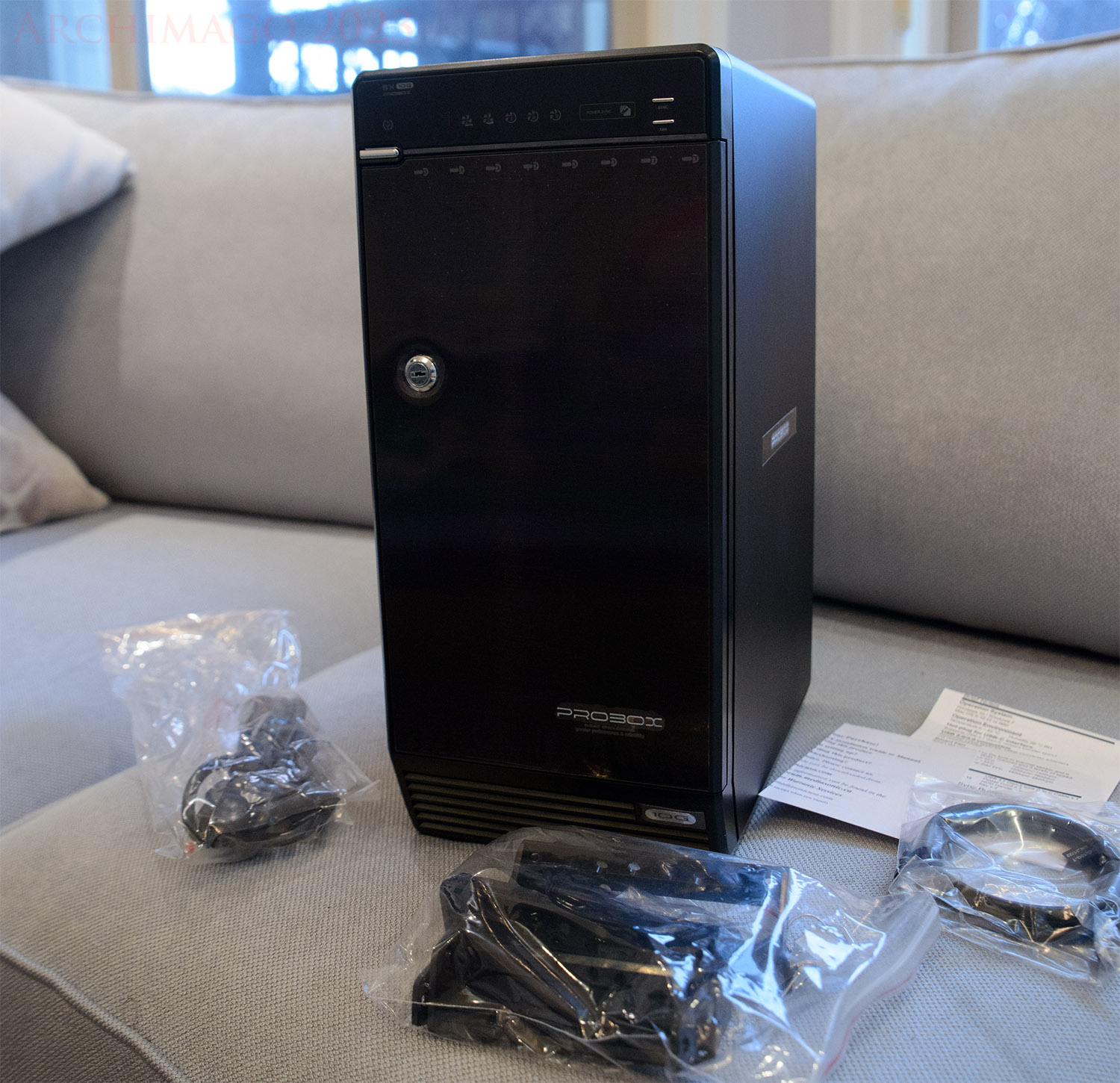
First, there's this Mediasonic Probox 8-Drive USB3.2 Gen 2 10Gbps enclosure [H82-SU31C] (US$350).
![]() |
| Box contents: IEC power cable, 8x plastic HDD handles and screws, 3' USB-C to USB-C cable. |
In 2023, while we're getting there with high capacity "3D" and higher endurance SSD designs, we're not quite at par with the storage capacity afforded by multi-terabyte hard drives available at excellent prices. I'm sure most of us have been gathering our archive of digital memories and other media for years and have a need for all those terabytes at least backed up.
I've been using the older USB 3.0 + eSATA version (H82-SU3S2) of this device for >10 years already as a simple 3.5" HDD backup box which unfortunately went a bit flaky on me with occasional loss of connection in the last few months. Hence the upgrade to this newer model.
As per the description, this is a 10Gbps USB 3.2 Gen 2 device, the interface is USB-C; nothing else other than the power connector on the back and a few buttons and indicators up front.
Saturday, 10 June 2023
Beelink EQ12: Low power Intel N100-based Roon endpoint and Kodi 4K/HDR/60fps player, general Windows 11 computer. A few words on HDR10(+), Dolby Vision, AV1, and Kodi. And hilarious Transparent $$$ cables.
![]() |
| Beelink EQ12 MiniPC, some testing with the RME ADI-2 Pro FS R Black Edition. |
Since around 2004, I've been using various computer systems for music playback, initially starting with ripped files on PCs and then quickly transitioning to server-endpoint "distributed" playback by something like 2006/2007 when I bought my first Slim Devices Squeezebox 3. I've never really looked back since, as this is IMO the superior way to manage music with a central home server repository and distributing the music around the home. It has been more than a decade since I've cared to use a CD transport other than to rip music and there's no reason why CDs would sound better anyways ("bit perfect" and all that).
Of course back in the day, especially prior to 2010, putting a computer in the sound room was likely going to be fraught with noise issues. In the 2nd decade of the 21st Century now, with much lower CPU/memory/motherboard power demands while capable of excellent speed, silent SSD drives, and small form factor MiniPCs, it's actually rather trivial these days to maintain cool and quiet, unobtrusive computers that perform well as AV "appliances". These machines will not contribute to acoustic or electrical noise pollution in listening rooms even with low ambient noise levels provided the hobbyist approaches device selection and optimization with some basic care.
Today, let's convert that little Beelink EQ12 Intel N100-based computer (discussed/reviewed last time) into something I would use as a Windows audio streamer and movie player in my media room. Let's talk about some BIOS settings, Windows set-up suggestions to consider, and computational potential.
Saturday, 27 May 2023
REVIEW: Beelink EQ12 Mini Computer - Intel N100 CPU (12th Gen, 4C/4T, 24EU iGPU), 8GB DDR5, 500GB NVMe. And on journalistic objectivity, truthfulness and non-neutrality.
For more than a year now, since the MeLE Quieter2Q, I've transitioned media playback away from the Raspberry Pi system in my main sound room as I've explored options in the MiniPC world. This is the result of technological progress as x86/x64 processors have become significantly more energy-efficient, available in smaller packages, with increasing processing speed, access to the huge library of PC software, and capabilities including support for multichannel HDMI audio output and 4K video decoding.
Yes, we could easily build massive "He-Man" computers these days sucking hundreds of watts to power fast CPUs and modern discrete GPUs, even as "audiophile computers", I believe these are clearly inelegant solutions for AV playback or even as a media server.
Today, let's look at a new entry - the Beelink EQ12 (currently just around US$250-300 depending on deals, with 8GB of DDR5 RAM, 500GB NVMe storage as tested). This machine uses the latest 12th Generation 10nm "Alder Lake" quad-core Intel N100 low-power processor running at up to 3.4GHz turbo. With this new generation, Intel has moved away from names like "Celeron" and "Pentium". While the specs say TDP of 6W for the part, in real life the computer does suck up more power.
For audiophiles thinking of using HQPlayer, these new processors feature the AVX2 instruction set; opening the doors for using the new versions of that software under Windows again should you desire. For the record, this machine was purchased through the usual retail channels.
Let's have a look today at this hardware, and evaluate the speed compared to previous reviewed machines on this blog.
Monday, 22 May 2023
Retro DIY Headphone Amp - The Audio Amateur, Gary A. Galo design, built by Mitch Barnett circa 1991.
Every once awhile, I think it's fun to try something a little different!
While the vast majority of us audiophiles buy our stuff, as per all tech hobbies at one point, this began with hobbyists in their workshops, basements, and "caves" putting together electronics parts and enthusiast kits with soldering irons making their own stuff. I remember the days in the early '70s as a child when the hi-fi system at home was put together by my dad based on designs he found in the magazines. A time before commercialization of consumer electronics was anywhere like it is today.
With miniaturization and economy of scale, these days, it's more expensive to build one's own components (both time and money) and more than likely the sound quality would not be as good. Of course, there is an element of lasting pride in building something oneself which we can never really capture when purchased with a credit card. Major respect to the DIY guys and gals out there still designing and making their own gear.
So instead of a commercially available product, let's have a look at the device shown above. It's a home-made "prototype" headphone amp lent to me by Mitch Barnett (of Accurate Sound) built on a wooden board (I guess there might be some vibration control with that ;-). He built this something like 30 years ago based on a design published in The Audio Amateur (4/91, predecessor to today's AudioXpress) by Gary A. Galo. For a bit of background on The Audio Amateur, check out this thread and post from Palustris.
Sunday, 14 May 2023
RESULTS: Internet Blind Test of 24-Bit vs. Dithered 16-Bit Part Deux - Daft Punk Edition
This test was launched on March 4th and remained open to May 5, 2023; plenty of time I trust for folks who wanted to perform the test to listen and give me their results. As indicated in that invitation post, this test was created as a response to discussions on a message forum where it was said that 24-bit audio could be audibly differentiated from 16-bit files. It was offered in the discussions that the Daft Punk track "Giorgio by Moroder" from Random Access Memories, an album well-known to audiophiles, is an example of a well-produced, modern recording that benefits from 24-bits "high resolution". For years, it has been available for download at places like HDtracks, and Qobuz.
In this post, let's discuss how the test samples were created, reveal which sample is the high resolution version, and results from the respondents. Grab a drink, let's have a peek... ;-)
Sunday, 7 May 2023
Audiophile Survey, early 2023: Who we are (including age and gender). What we use. How we think.
Well ladies and gentlemen, thanks to all who took the time to complete the information in the open "SURVEY: What audio playback system and/or streaming music service are you using in 2023?" post. The survey collected responses from February 11 to May 5, 2023 on this blog, and as usual, the responses came from audio lovers around the world, receiving in total 1330 entries with general information on demographics, broadly what kinds of systems are being used, multichannel playback, interest in masterings, and for those using streaming subscriptions, which ones.
As with any survey, we have to start with some context for the data. Obviously, the individuals who submitted results to me would have been primarily the viewers on this blog although I know the survey was advertised at various audiophile-related forums. I did not do any special advertising personally, other than mentioning it on a few forums I visited like Audiophile Style or Steve Hoffman Forum. I don't maintain much of a social media presence so basically just let the survey diffuse across the Internet.
Given the nature of this blog and its contents, I'd like to think that this survey will tell us about some of the characteristics of the subgroup of intelligent, reasonable, balanced, technically savvy, prudently skeptical, practical audiophiles around the world in the first half of 2023. ;-)
Monday, 1 May 2023
Musings & Meditations on the intersections between clinical care and audiophilia.
![]() |
| The "Monastery" of Petra (Jordan); carved out probably around 1st Century CE. Harder to get to, but I thought this was just as awe inspiring as the "Treasury" made famous in "Indiana Jones and the Last Crusade". |
In the last month, I had the pleasure of travelling through Jordan and Israel. As I pondered on some of the sights and sounds of the ancient civilizations, I wondered among other things, perhaps not surprisingly, on the audiophile pursuit for the purposes on this blog. :-)
Regardless of culture, we as humans share the same universal hopes, fears, and desires as we carve out a place in this world for our families and ourselves. Whether it's with a street vendor in Amman or some guy in a Shanghai night market, haggling over the best price for a souvenir T-shirt is essentially the same process. Nobody wants a bad deal, or items below expected quality.
We can discuss academically about the mechanisms of price discovery, study the complex verbal and nonverbal negotiation techniques, or explore macroeconomic determinants of supply and demand. Whether it’s getting a decent T-shirt or purchasing "high-fidelity" audio products, as consumers, value is always a core consideration as I've discussed many times over the years as a recurring theme (including here, here and here).
Coincidentally, a few weeks prior to leaving on vacation, I had a discussion on Audiophile Style with Andrew Quint who writes for The Absolute Sound. Like him, I work as a doctor and engage in the art and science of clinical care of and with people every day while pursuing the audiophile hobby in my free time. Over the years, I have virtually met some of you on forums and through E-mails also coming from clinical backgrounds whether as pharmacist, psychologists, therapists, nurses, etc. This article germinated during my travels as I thought about the complexity of clinical care and likewise some of the complexities that arise in audiophile discussions. Thankfully, related themes are nowhere as complicated or potentially perilous for us audiophiles and the epistemological debates among us seem safely parabolical of more significant ideological differences beyond just this little hobby sandbox
Since clinical care is a huge topic, permit me to talk somewhat loosely about some points of intersection since I think these factors have affected my attitudes toward the audiophile hobby and informed the judgments I make when reviewing products contained in these pages. These ideas may resonate with your own thinking as an audiophile.
(Along the way in this article, let me show you some pictures I took during the vacation!)
Saturday, 15 April 2023
MEASUREMENTS: Fosi Audio TB10D [Upgraded Version] stereo amplifier (TI TPA3255 Class D). Ethernet is inherently "isolated".
Not much time this week to play with the toys as I'll be heading off on vacation for a few weeks. However, I did receive the Fosi Audio TB10D [Updated Version] (<US$80) above recently that I wanted to use as an inexpensive "utility" amplifier for various measurements and experiments. It's also based on the TI TPA3255 Class D chip amplifier; same as the AOSHIDA A7 recently reviewed.
As you can see in the unboxed picture above, there are no frills, just the amplifier and a 32V/5A power supply (same specs as AOSHIDA).
This is the "Updated Version" with improvements as discussed by the Cheap Audio Man back in late 2022. Presumably this update was released around September or October 2022. I see ASR measured this amplifier in September 2022 - not sure which version that was. I purchased this amp from the usual retail channels.
Due to the time constraints, I'll focus more on "core" measurements and compare especially to the AOSHIDA.
Saturday, 8 April 2023
As We Hear It: Innomaker HiFi DAC Pro HAT review by Doug Gardner. And MQA is bankrupt; the end is here.
I’ve been following along with your experiments using the Cosmos ADC and APU to test a variety of gear and I’ve put together a similar setup to do some measurements too. I’m sharing some results from testing I’ve done of the Innomaker HiFi DAC Pro HAT for the Raspberry Pi. I bought the DAC for US$89 directly from Innomaker for use in my home office.
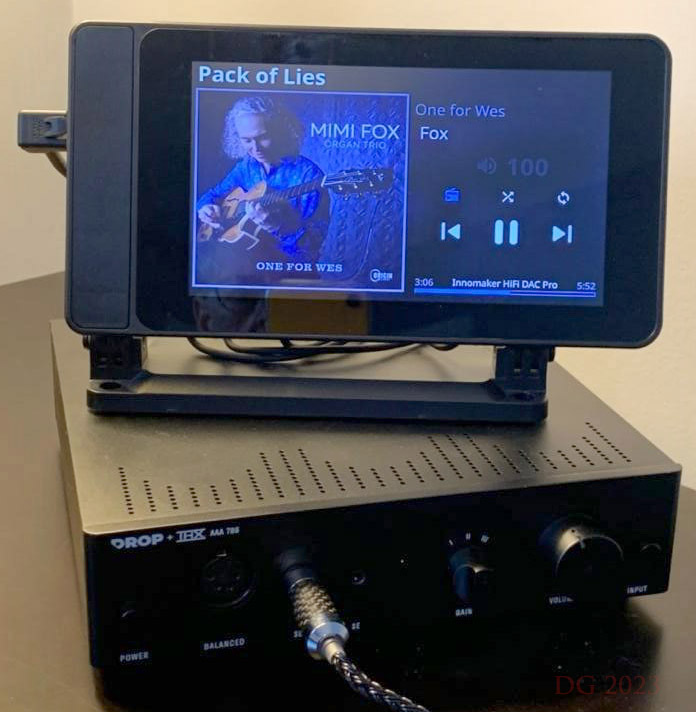
My home office system is headphones only using the Drop THX-789 headphone amplifier fed by a Khadas Tone1 (Tone Board Generic Edition) DAC connected via USB to a Raspberry Pi 4 with display running RopieeeXL. Music playback software is Roon with Drop+Dan Clark Aeon X, Aeon Noire, or Drop x Sennheiser HD6XX headphones with PEQ settings from Oratory1990 to make the physical sounds. This setup gives me a clean and compact footprint with a touch screen for ease of use and objectively good fidelity per the measurements and reviews performed by you here on your blog and by Amir over at Audio Science Review. A drawback to this setup is that the Tone1, sitting in a separate box and with the USB and unbalanced audio cables, makes for additional clutter on the desk.
The Innomaker HiFi DAC Pro uses the same DAC chip, ESS 9038Q2M, as the Khadas Tone1 but, unlike the Tone1 Generic, is HAT compatible and has both balanced and unbalanced output. Balanced output is via two 3.5mm headphone jacks and unbalanced through a single 3.5mm output that can also serve as headphone out. I chose to use the balanced outputs. I assembled 3.5mm to XLR cables from spare Amazon cables I had on hand. No need for anything flashy on the cable front. If you don’t want to roll your own then you can buy 3.5mm to XLR cables from Innomaker’s Amazon store. It should sound like the Tone1, right?
Saturday, 1 April 2023
MEASUREMENTS: Topping HS02 USB 2.0 isolator. (This works with the E1DA Cosmos ADC; and the Topping + Intona "double isolation" of DAC and ADC.)
Hey guys and gals, I must be a sucker for relatively inexpensive USB galvanic isolators. To be honest, this is mostly because I look for ways to lower noise on my measurement testbench, not that I'm concerned with the actual audiophile sound system these days! ;-)
Today, let's have a look at the recently released Topping HS02 USB2.0 isolator (currently ~US$100). This is an update to the previously reviewed HS01 last year. As you can see from the picture and specs, the box now has selectable USB-A/B connectors or USB-C. Isolation is not just applied to the in/out USB data connectors, but also the auxiliary power input with filtering which means the device could stay free of noise even if we plug in a power source with some noise in it. As usual, be mindful of power-hungry USB-powered devices which will require auxiliary power input.
Furthermore, Topping has improved compatibility now with the ability to negotiate USB2.0 low (1.5Mbps)/full (12Mbps)/high speeds (480Mbps). I can confirm that my low speed wireless keyboard dongle works fine.
The diagram showing the path of the data and power connections is relatively clear printed on top. Inside the box are a couple of pamphlets - the black one is the warranty card and Topping catalogue, and the white user manual. There's a short USB-A to USB-B cable in the plastic bag.
Saturday, 25 March 2023
RETRO-AUTOPSY: Museatex Melior BS-1 Bitstream S/PDIF DAC (circa 1995?). A few words about external clocks for audiophiles. And a speaker cable blind test?
The company Museatex was formed around 1990 by Ed Meitner and John Wright based in Calgary, Alberta, Canada. Over the years, the brand was assumed under A/D/S which eventually closed in 2001. There's still a web page for information on Museatex products here. Ed Meitner has moved on these days to EMM Labs since 1998 and given his work with SACD, his name has been associated with "bitstream" type technologies since (some more info/video).
By the end of the 1980's, 1-bit Philips "Bitstream" PDM DAC chips started to show up in the market with the Philips SAA 7321 chip as one of the 1st generation devices (see Stereophile reporting back in 1989). Some of these chips were incorporated in CD players like the Meridian 208 that came out in early 1990, well-reviewed by Paul Miller in High Fidelity.
By 1991, the "second generation" Philips SAA 7350 "bitstream" DAC became available, capable of taking up to 20-bit PCM (from 16-53kHz sample rate) and upsampling to 1-bit SDM applying 3rd order noise shaping (some more history here). It is this DAC chip that's at the heart of the Museatex Melior Bitstream DAC, I believe first released in 1992. Here are the specs from the company.
The exact history of this particular unit I had access to has been shrouded in the sands of time, but was probably purchased around 1995. The original suggested price on one of these was US$899 which would be about equivalent to over US$1500 in 2023. Even to this day, I've seen comments from audiophiles who have a special affinity to the sound of this vintage DAC. Claims to fame included anti-jitter input circuitry (supposedly reducing "glare and harshness"), a custom digital filter allowing for "more accurate signal conversion", and high quality power supply with line noise filtering.
Thanks again to my friend linnrd for digging this unit out from his audio device archives. While externally it looks to be in very good shape, unfortunately, it didn't quite power up normally for me which sadly resulted in this article being more of an "autopsy" rather than actual measurements. I guess having a look inside is still better than nothing for historical documentation if nothing else.
Saturday, 18 March 2023
REVIEW/MEASUREMENTS: AOSHIDA A7 Class D TI TPA3255 amplifier. Good sound. Good power. Economical.
Above, you see the small AOSHIDA A7 Class D amplifier which we'll go in depth with in this post. It's inexpensive and can be purchased for less than US$150 these days. This design is also sold as the Douk Audio H7 with a different color scheme, presumably the innards must be very similar if not identical. I preferred the look of the black AOSHIDA version with orange-ringed VU meter. I purchased this amplifier through the usual retail channels.
Over the years, it has been good to see the evolution of Class D designs and the inexpensive "chip" amplifiers. Internally, this is based on the TI TPA3255 "PurePath" chip (released in 2016) rated to provide up to 315Wpc into 4Ω stereo but at 10% THD when provided with adequate power (data sheet max is 53.5V). Notice the italics to emphasize that these numbers must be put into context. For audiophiles who want lower distortion in their amps (like <1% THD), we would be looking at much more conservative power figures than that 300+W being promoted for these amps.
(The chip also has a mono configuration that's spec'ed at up to 600W into 2Ω which would not apply for this review.)
Saturday, 11 March 2023
The Audiophile Wisdom of ChatGPT (Feb 13, 2023 Version): Learnings from an artificial intellect on an esoteric hobby. (And on creativity?)
I'm sure none of us these days have escaped news about ChatGPT from OpenAI. Articles have been ubiquitous covering the implications of what this "chatbot" is able to do. No doubt, there will be deep implications stemming from this technology already being debated through the halls of academia on how it will affect everything from education, to work, to legal ramifications. As with any likely transformative technology, there will be promise and fear.
Already, I've seen many articles out there including in our little corner of the universe with Stereophile's "As We See It" in February referencing ChatGPT.
As you're likely aware, ChatGPT achieves its remarkable abilities based on Generative Pre-trained Transformer (GPT-3.5) "large language model", a sophisticated "self-supervised" general AI model based on >175B parameters combed through 570GB of data as text off the Internet, books, and Wikipedia. Yes, human feedback is part of the training process and data continues to be gathered from users to improve the model. At the time of this article, the openly available online ChatGPT has been trained with data up until September 2021 as can be seen here:
Arch: Who won the Superbowl in 2023?
ChatGPT: I'm sorry, but I am not capable of predicting future events as I am a machine learning model trained on historical data. As of my knowledge cutoff date, which is in September 2021, the most recent Super Bowl was Super Bowl LVII and it has not happened yet. It is scheduled to take place on February 5, 2023, so we won't know the winner until the game is played.
Saturday, 4 March 2023
Internet Blind Test: 24-Bit vs. Dithered 16-Bit Part Deux - Daft Punk Edition! And the honest desire to seek truth as audiophiles.
![]() |
| BTW: 1.5kHz sine waveform, -65dBFS. 16-bits on the left, 24-bits on the right. |
It's amazing how time flies. Nine years ago - 2014 - at a time when hi-res audio downloads were being promoted as the "next best thing" for audiophiles, we ran a 24-bit vs. 16-bit blind listening test on this blog. I'll leave you to examine the results.
Since then, electronics like DACs have advanced quite significantly. Compared to 2014, these days, high quality asynchronous USB DACs have become ubiquitous. Jitter is basically a non-issue now. Inexpensive audio streamers like Raspberry Pi devices can be easily put together. We can all play music with wide selections of digital filters without great difficulty. Very high quality headphone amps and phenomenal headphones have become commonplace with a growing "head-fi" community.
Recently, I had some fun on this Steve Hoffman Forums thread engaging in the discussion about 16-bit vs. 24-bit; the topic of audibility again came up. As usual, things can get pretty contentious among audiophiles and since it has been awhile and perhaps some of you did not have the opportunity to participate in 2014, let's do a blind test again for those wanting to listen to 24-bit vs. 16-bit audio.
Let's use popular music rather than the more esoteric 24-bit 2L classical recordings last time - let's try some "classic" Daft Punk. ;-)


.jpg)


.png)